How Accurate Is Apple Watch VO2 Max? What the Validation Studies Show
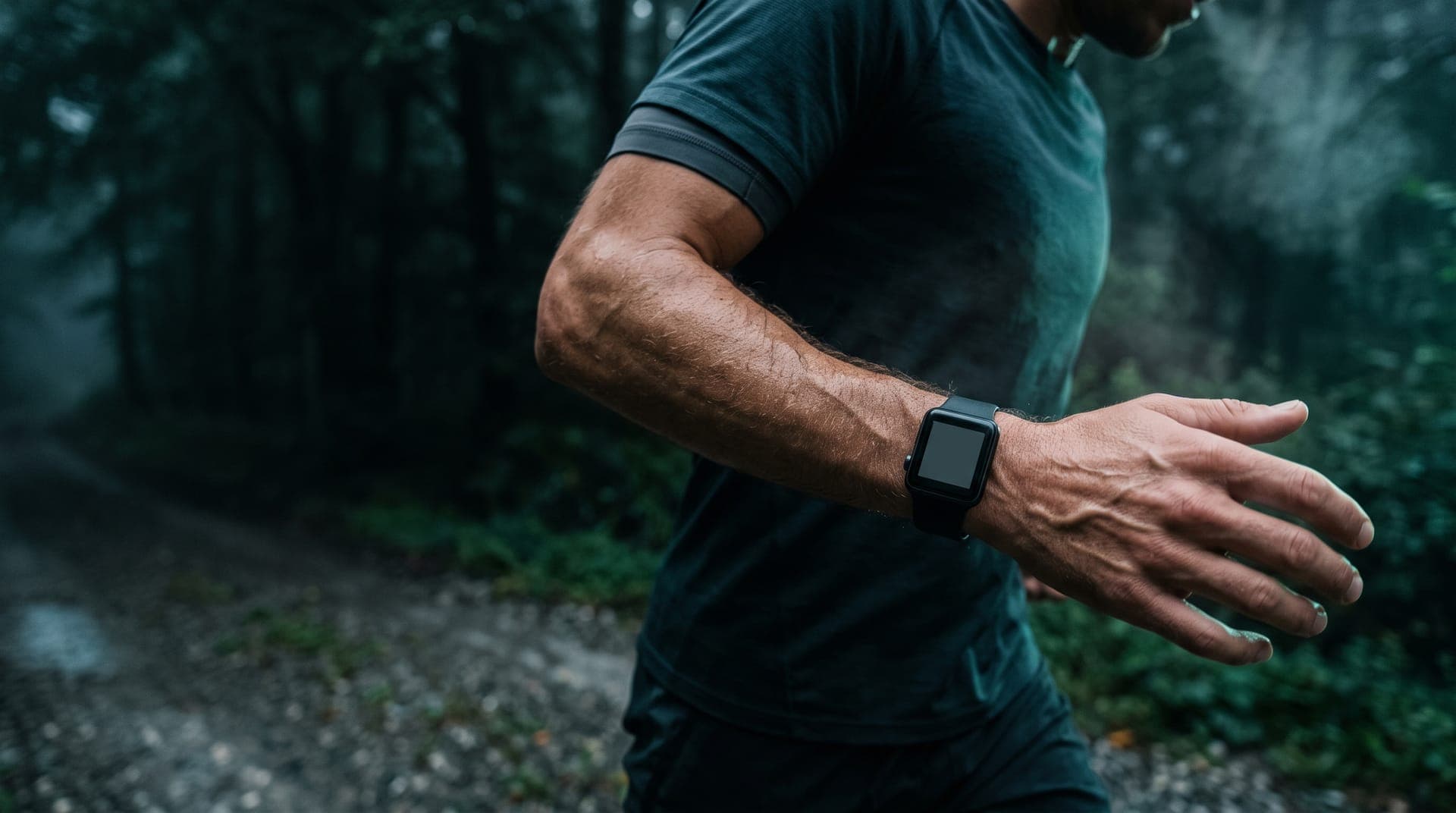
TL;DR: Apple Watch's Cardio Fitness score has now been tested against lab-measured VO2 max in three separate studies. For an individual, it misses by about 13 to 16% on average, and the error isn't random: it tends to underestimate fit people and overestimate less-fit ones. Don't treat the number as your real VO2 max. Treat it as a trend line, and keep the conditions that feed it consistent.
VO2 max went mainstream when longevity doctors started calling it the single best predictor of how long you'll live. They're not exaggerating much. In Kodama and colleagues' meta-analysis of 33 studies and over 100,000 people, every 1-MET increase in cardiorespiratory fitness (about 3.5 mL/kg/min of VO2 max) was linked to a 13% lower risk of all-cause death (Kodama et al., 2009).
So people look at the Cardio Fitness number in Apple Health and want to know if they can trust it. Short answer: sort of, in a specific way.
How Apple Watch estimates VO2 max
The watch never measures oxygen. A real VO2 max test puts you on a treadmill or bike wearing a mask connected to a metabolic cart, and you run until you can't. The cart measures how much oxygen you actually consume at peak effort.
Apple does something much gentler. During an outdoor walk, run, or hike, the watch tracks your heart rate against your speed and the GPS-measured grade. If your heart rate stays relatively low while you move fast, the model infers a bigger aerobic engine. It combines that with your age, sex, weight, and height from the Health app, then extrapolates to what your maximum would probably be.
That's a submaximal estimate. You never go near max, so the watch has to guess where the top of the curve sits. Every submaximal test ever designed has this weakness, and it's where most of the error comes from.
What the validation studies found
Three independent studies have compared Apple Watch against a metabolic cart.
Series 7. Caserman and colleagues tested 19 adults and found the watch read 4.5 mL/kg/min low on average, with a mean absolute percentage error of about 16% (Caserman et al., 2024). The more interesting part was the pattern. Participants with poor fitness were overestimated by about 3.8 units. Participants with excellent fitness were underestimated by about 12.
A 2025 treadmill study. Lambe and colleagues ran 28 mostly fit adults through a treadmill protocol and found the watch underestimated by about 6 mL/kg/min, with a mean absolute percentage error of 13.3% (Lambe et al., 2025). The limits of agreement ran from roughly 6 units too high to 18 units too low. That's a huge band for one person.
Series 10. A 2026 validation from Dublin tested the newest hardware against indirect calorimetry and landed in the same place: about 6 units low on average and roughly 13% error. The watch put only 14% of participants in their correct fitness percentile band.
Three studies, multiple hardware generations, one consistent story. The average error hasn't moved much, and the direction of the bias hasn't changed.
The bias runs in a predictable direction
This is the part most coverage misses. The error isn't scatter around the truth. It compresses everyone toward the middle.
If you're genuinely fit, the watch probably reads you low. A trained runner with a lab VO2 max of 58 could easily see 48 on their wrist. If you're sedentary, it probably reads you a bit high, which is the worse direction, because it tells an unfit person they're doing better than they are.
Apple's own documentation also notes the estimate is designed for a 14 to 60 mL/kg/min range, so highly trained endurance athletes are partly outside what the model was built to handle.
A few things make it worse for specific people:
- Heart-rate medications. Beta blockers and some calcium channel blockers blunt heart rate. Apple lets you flag these in the Health app, and you should, because a suppressed heart rate looks like fitness to the algorithm.
- Lifters who rarely walk or run outside. No qualifying outdoor workouts means no fresh estimates. Your number can sit stale for weeks.
- Hills, heat, and treadmill-only cardio. Grade and temperature both push heart rate around, and indoor sessions don't feed the estimate at all.
So is the number useless?
No. It's just the wrong tool for the question most people ask of it.
"What is my VO2 max?" gets a rough answer, maybe plus or minus 7 units. "Is my aerobic fitness going up or down?" gets a much better one, because the watch's bias for you is fairly stable. If it reads you 6 units low today, it will probably read you about 6 units low in three months too. The gap cancels out when you compare you against you.
That's the same logic we used for smart scales and sleep trackers: a biased instrument can still track change well if the conditions are held steady.
How to get a cleaner trend
The estimate is only as good as the workouts feeding it. To tighten it up:
- Log real outdoor walks or runs, at least 20 minutes, with GPS on. Choose "Outdoor Walk" or "Outdoor Run," not "Other."
- Keep your route and pace roughly consistent. A flat loop at a steady effort gives the model the cleanest signal.
- Keep your Health profile current. Weight feeds the calculation directly. If you've dropped 10 pounds on a cut and never updated it, your VO2 max estimate is off for a reason unrelated to fitness.
- Look at 8 to 12 week trends, not weekly readings. Day-to-day wobble of 1 to 2 units is noise.
- Get one lab test if the number matters to you. A single metabolic-cart test (usually $100 to $250) gives you your personal offset, and from then on you can mentally correct the watch.
What actually moves VO2 max
If the trend is flat and you want it moving, the levers are well known. Consistent easy aerobic volume builds the base; we covered how to fit that alongside lifting without losing muscle in Zone 2 cardio for fat loss. One or two harder interval sessions a week push the ceiling. Use the heart rate zone calculator to set those intensities from your own numbers instead of generic age formulas.
Body composition matters too. VO2 max is expressed per kilogram, so losing fat raises the number even if your heart hasn't changed. That's a real improvement for how you move day to day, but it's worth knowing which part of the change is cardio and which is the scale.
The bottom line
Apple Watch VO2 max is a biased estimate with roughly 13 to 16% individual error, and it pulls everyone toward the average. Fit people should assume it reads them low. Unfit people shouldn't take comfort from it. For tracking direction over months, though, it's genuinely useful, and it's free data you're already collecting.
It's also one signal among several. Readiness, sleep, training load, and body composition all move together, and looking at one wearable number in isolation is how people draw the wrong conclusion. We dig into the readiness side in HRV and training readiness.
That's the problem Protokl is built around. It pulls your Apple Health data, including cardio fitness, heart rate, sleep, and weight, into the same place as your training and nutrition, so a dip in one number gets read in context instead of in a vacuum. If you're already wearing the watch, that data might as well be pointed at a plan.
Post to Instagram / TikTok
Tap Share, choose Instagram or TikTok, and this 1080×1080 card loads straight into the post composer — ready to publish. Add your caption and point your bio link back here, since links aren’t tappable inside IG/TikTok posts.
Related reading
- HRV and Training Readiness: How to Know When to Push or Back OffYour morning HRV reading is the closest thing to a fuel gauge for training. Here's what it actually measures, how to read it without obsessing, and how to turn it into a real push-or-rest decision.
- Should You Do Cardio Before or After Lifting?Cardio order matters less than most lifters think, but it isn't nothing. Here's what the concurrent training research says about sequence, and the rule that actually protects your strength.
- Is Apple Watch Heart Rate Accurate When Lifting Weights?Wrist heart rate is great on a run and shakier under a barbell. Here's what the validation studies show about Apple Watch during strength training, why gripping throws it off, and how to get cleaner data.
Want this as a daily protocol?
Protokl builds personalized workout and nutrition plans around your body composition, goals, and experience level. Science-backed. AI-powered. Syncs with Apple Health.
Get Protokl →