Is the 12-3-30 Workout Good for Fat Loss? A Coach's Verdict
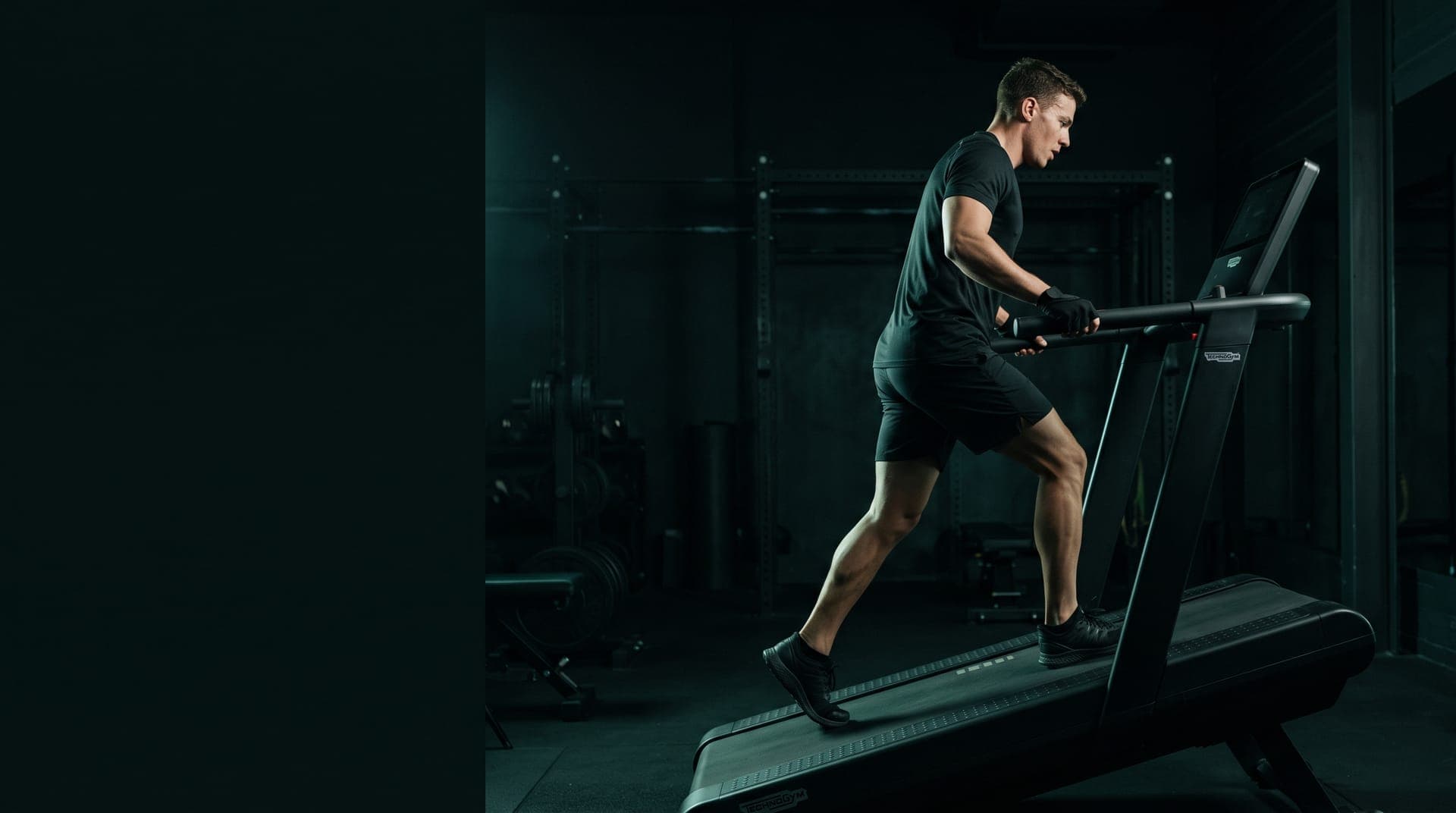
TL;DR: The 12-3-30 workout (12% incline, 3 mph, 30 minutes) burns roughly 250 to 350 calories for most adults, about two and a half times what the same walk on flat ground costs. It's low-impact, easy to recover from, and barely touches your lifting, which makes it one of the better cardio options on a cut. It is not a fat-burning hack. A 2025 lab study found running burns calories faster, and the higher "percent fat" during incline walking doesn't change body composition. Use it to widen your weekly deficit, don't hold the handrails, and don't eat it back.
12-3-30 went viral because it sounds too simple to work. Set the treadmill to a 12% incline, walk at 3 miles per hour, keep going for 30 minutes. No intervals, no running, no programming. Millions of people swear it melted fat off them, and plenty of lifters now wonder if they should swap their cardio for it.
Short answer: it's a good tool with a bad reputation for magic. Here's what it actually does.
How Many Calories 12-3-30 Really Burns
You don't need a fitness tracker's guess for this. The ACSM metabolic equations for walking, which have been the standard in exercise physiology labs for decades, let you estimate the oxygen cost of walking at any speed and grade.
At 3 mph and 12% incline, walking costs about 29 mL of oxygen per kilogram per minute, or roughly 8 METs. At 3 mph on flat ground, it's about 11.5 mL/kg/min. The incline more than doubles the work.
| Body weight | 12-3-30 (30 min) | Flat walk, 3 mph (30 min) | |---|---|---| | 60 kg (132 lb) | ~260 kcal | ~105 kcal | | 75 kg (165 lb) | ~325 kcal | ~130 kcal | | 90 kg (198 lb) | ~390 kcal | ~155 kcal |
Those are gross numbers, including the calories you'd have burned sitting on the couch anyway (roughly 40 to 50 per half hour). Net, a 75 kg person is adding somewhere around 275 calories per session. That lines up with lab data: a 2025 study in the International Journal of Exercise Science measured an average of about 10 calories per minute during 12-3-30 in young adults.
Five sessions a week at that rate is roughly 1,400 extra calories, or a bit under half a pound of fat per week, assuming your intake stays put. That's a real contribution to a cut. It's also why the workout earned its following.
The "It Burns More Fat" Claim, Corrected
That same 2025 study is the one most headlines cite as proof that 12-3-30 "burns more fat than running." Here's what it actually found. When researchers matched 12-3-30 and self-paced running for total calories burned, incline walking got about 41% of its energy from fat versus 33% for running. Running, meanwhile, burned calories faster (about 13 per minute versus 10) and reached the same total in less time.
So the incline walk used a higher percentage of fat during the session. That number doesn't matter for your physique. Fat loss is decided by your energy balance across days and weeks, not by which fuel you oxidized during one workout. If you burn more carbohydrate on a run, you refill those glycogen stores from food later, and the net effect on body fat comes out the same. This is the same myth we unpacked in Zone 2 cardio for fat loss and fasted cardio.
What does matter: total calories burned per week, and whether you can keep doing it. On that second point, 12-3-30 does very well.
Why It Works Well for Lifters
The reason I like 12-3-30 for people who lift isn't the calorie burn. It's the cost.
- Low interference. The research on concurrent training shows that cardio's drag on strength and hypertrophy scales with frequency, duration, and especially impact. Running carries a bigger interference effect than cycling or walking (Wilson et al., 2012). An incline walk is about as low-interference as cardio gets. We cover the broader picture in does cardio kill gains.
- Joint friendly. Slowing down and adding grade cuts knee loading compared with faster level walking while keeping the energy cost high (Ehlen et al., 2011). If running beats up your knees or your shins, this is a workable swap.
- Recoverable. It sits mostly in Zone 2 for trained people, so you can do it the day after legs without wrecking the next session.
- Simple. No intervals to track and no pace to hold. Consistency beats optimization in a fat-loss phase, and the easiest plan to repeat usually wins.
Where It Falls Short
It's not perfect, and it's worth knowing the limits before you build a cut around it.
It's slow per minute. If you only have 20 minutes, a hard bike or run session burns more. 12-3-30 trades time for low fatigue.
It's hard for beginners. 12% at 3 mph is a steep grind if you're new or carrying a lot of weight. Start at 5 to 8% and 2.5 mph for 15 to 20 minutes, then add incline before speed.
Holding the rails ruins it. Leaning on the handrails transfers a chunk of your body weight onto the machine and drops the real energy cost well below the table above, while the treadmill display keeps reporting the full number. If you need the rails, the incline is too high.
People eat it back. This one kills more cuts than anything else. In a well-known supervised exercise study, average fat loss came in below prediction partly because many participants unconsciously ate more (King et al., 2008). Your treadmill and your watch will both overestimate the burn, so treat exercise calories with suspicion. We go deeper on this in should you eat back exercise calories.
How to Use 12-3-30 on a Cut
Here's how I'd program it for someone lifting three to five days a week:
- Set the deficit with food first. Cardio widens a deficit, it doesn't replace one. Get your targets from our cut calculator.
- Run 3 to 5 sessions per week. Do them after lifting or on separate days. If you're unsure of the order, our cardio before or after lifting guide has the full breakdown.
- Keep it conversational. Check against your personal Zone 2 range with the heart rate zone calculator. If you're gasping, lower the incline.
- Don't log the treadmill's number as food money. Let your weekly weight trend tell you whether the deficit is working, then adjust intake.
- Watch your daily steps. If 12-3-30 leaves you so tired that you sit for the rest of the day, you may lose the burn you just gained. NEAT and steps quietly matter more than the workout.
Bottom Line
12-3-30 is a good fat-loss tool for lifters because it burns a meaningful number of calories for very little recovery cost. It isn't special because of fat oxidation. It's useful because it's easy to repeat and doesn't steal from your training. Hands off the rails, keep it in the conversational zone, and don't eat back the calories.
The harder part is knowing whether the cardio is actually moving your body composition or just your appetite. Protokl pulls your workouts and steps from Apple Health, logs meals from a photo, and forecasts your body composition from your real weight trend, so you can see if your 12-3-30 sessions are paying off in fat lost rather than guessing from a treadmill readout.
Post to Instagram / TikTok
Tap Share, choose Instagram or TikTok, and this 1080×1080 card loads straight into the post composer — ready to publish. Add your caption and point your bio link back here, since links aren’t tappable inside IG/TikTok posts.
Related reading
- Should You Do Cardio Before or After Lifting?Cardio order matters less than most lifters think, but it isn't nothing. Here's what the concurrent training research says about sequence, and the rule that actually protects your strength.
- How to Take Progress Photos That Actually Show ChangeMost progress photos are useless because the lighting, pose, and time of day change more than the body does. Here is the protocol that makes the comparison honest.
- Weight Lifting vs Cardio for Fat Loss: What the Research Actually ShowsCardio burns more calories per session, but lifting decides what kind of weight you lose. Here's what the trials show and how to split your week for fat loss without losing muscle.
Want this as a daily protocol?
Protokl builds personalized workout and nutrition plans around your body composition, goals, and experience level. Science-backed. AI-powered. Syncs with Apple Health.
Get Protokl →