How to Take Progress Photos That Actually Show Change
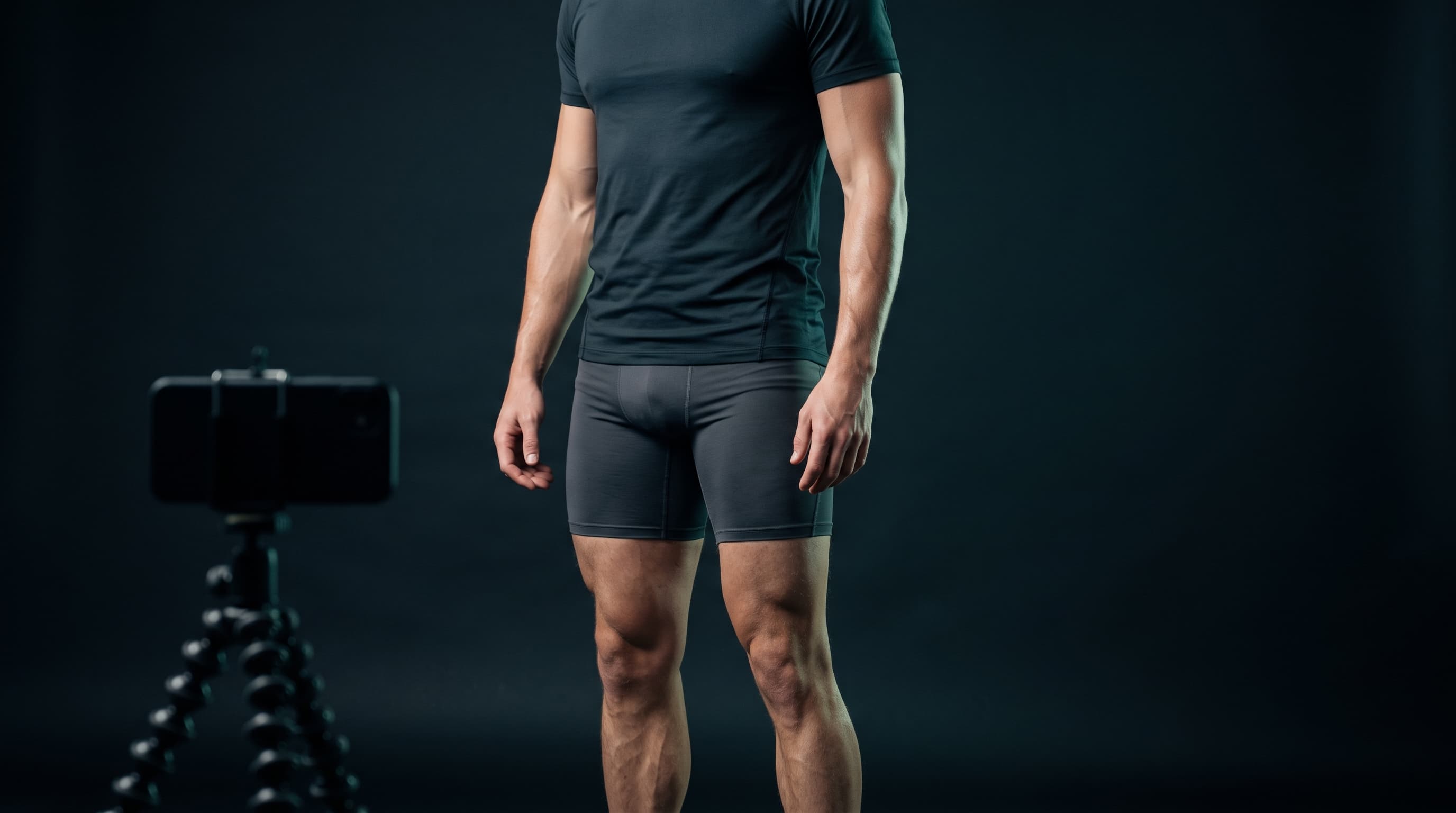
TL;DR: A progress photo only means something if everything except your body is held constant. Same spot, same light, same time of day, same pose, same clothing, camera at navel height and about eight feet back. Shoot front, side, and back every two weeks fasted, first thing in the morning, and never compare a bathroom mirror selfie to a gym-lighting shot. Standardized photos will show recomposition that the scale flatly denies.
The scale is a blunt instrument. It reports total mass and refuses to tell you what kind. Photos report the thing you actually care about, which is shape. The problem is that almost nobody controls the conditions, so what they end up comparing is two different lighting setups wearing the same person.
Here's the protocol that fixes it.
Why photos beat the scale for recomposition
Body weight moves for reasons that have nothing to do with fat or muscle. Glycogen carries roughly three grams of water per gram stored, sodium shifts fluid within hours, and menstrual cycles move several pounds on their own. Orsama and colleagues tracked 4,657 weigh-ins across 80 adults and found a reliable weekly rhythm, with weight peaking Sunday and Monday and drifting down through the week (Orsama et al., 2014). Nothing about anyone's fat mass followed that rhythm. It was food volume and water, on a calendar.
That noise is why a lifter in a proper recomp can hold the same number for eight weeks while their waist drops two inches. The scale has no vocabulary for that. Photos do, if you shoot them properly. I've covered the mechanics of the scale problem in more detail in why the scale lies, and the broader measurement stack in how to track recomp progress.
There's also a technical case. Image-based body composition estimation has gotten genuinely good. Tinsley's group validated a smartphone 3D scanning method against DXA in 131 adults and reported intraclass correlations of 0.996 to 0.997 with mean absolute error around 3.5% for body fat (Tinsley et al., 2024). A separate validation in npj Digital Medicine reached similar conclusions using ordinary two-dimensional phone photos (Majmudar et al., 2022). Your body's silhouette carries real information about composition. Standardizing the photo is what lets you read it.
The five variables you have to lock
Every one of these changes apparent body fat more than two weeks of dieting does.
1. Light. This is the big one. Overhead light carves shadows into your abdomen and makes anyone look leaner. Flat frontal light erases definition. Pick one source and never change it. My recommendation: a window with indirect daylight, positioned in front of you, with the ceiling light off. Indirect daylight is the most consistent free light source most people have, and it doesn't fake abs.
2. Camera position. Phone on a tripod or leaned against a stack of books, lens at navel height, roughly eight feet away. Navel height matters because a phone held at chest level tilts down and shortens your legs, and a phone on the floor does the opposite. Mark the floor spot with tape. Mark where you stand too.
3. Time of day and gut state. First thing in the morning, after the bathroom, before eating or drinking. Abdominal appearance changes dramatically with food volume in the digestive tract. Fasted morning is the only state you can reliably reproduce.
4. Pose. Three shots: front relaxed, side relaxed, back relaxed. Arms hanging naturally at about a 30 degree angle from the torso so your lats are visible but not flared. Feet at shoulder width. Look straight ahead. If you want a flexed set, take those as an additional four shots, never as a replacement, because flex quality varies with mood and training and will lie to you.
5. Clothing. Same minimal garment every time. Waistbands move. A different pair of shorts sitting an inch higher will read as fat gain.
Standardizing these five takes about ten minutes to set up once, and thirty seconds per session afterward.
How often to shoot
Every two weeks. Weekly is too often to see anything and invites daily-scale-style overreaction. Monthly is fine but you lose resolution on a 12 week block.
The reason two weeks works is arithmetic. A sustainable cut runs at roughly 0.5 to 1.0% of bodyweight per week, which is the range Garthe and colleagues found preserved lean mass in athletes while faster losses did not (Garthe et al., 2011). For a 180 pound lifter that's about two to three and a half pounds of fat over a fortnight. That is right at the edge of visible. Below that window you're photographing water.
Shoot on the same day of the week, in the same state. If you take the shot on a Sunday morning after a Saturday of eating out, and the next one on a Wednesday morning after three low-carb days, you've measured your weekend, not your progress.
Reading them without fooling yourself
Three rules.
Compare across at least six weeks, not two. Two-week comparisons are mostly noise even under a good protocol. Line up week 0, week 6, and week 12 side by side. That's where change becomes undeniable.
Compare same-to-same. Front relaxed against front relaxed. Never a relaxed shot against a flexed one, and never a morning shot against an evening one. This sounds obvious and it's the single most common way people convince themselves a diet is failing.
Trust the side shot most. The front view is dominated by lighting and posture. The profile shows abdominal thickness and lower back fat, which are the two places that actually move first on most people and the two places you can't cheat with a shoulder roll.
Pair the photos with a tape measure at the navel and one circumference you care about, and you have a complete picture without a lab. If you want to convert that into a number, the body fat calculator will do it from tape measurements, and how to track body fat at home covers the accuracy limits of every home method honestly.
The storage problem
Most people's progress photos live in their camera roll, buried between screenshots and dog pictures, in chronological order with no way to put week 0 next to week 12. That is why the habit dies around week four. The photo set only pays off when comparison is one tap, not an archaeology project.
Whatever you use, it needs to keep the shots in a dedicated timeline and let you view two dates side by side. That's the whole feature list. A folder in your photos app with a strict naming convention works. So does a purpose-built body composition tracking app if you'd rather not maintain the naming convention yourself.
Start today, not at week zero of your next diet
The most valuable photo in the set is the one you should have taken three months ago. Take the first set this morning under a protocol you can repeat, and in twelve weeks you'll have something the scale can never give you: proof of what changed and where.
Protokl stores your progress photos in a dated timeline and puts any two of them side by side, so the comparison takes one tap instead of a scroll through six hundred camera roll images. It sits next to your weight, measurements, and training data, which is the only way a photo actually becomes evidence rather than a vibe. Try it free.
Sources
- Orsama, A.-L., et al. (2014). Weight rhythms: weight increases during weekends and decreases during weekdays. Obesity Facts, 7(1), 36-47.
- Tinsley, G. M., et al. (2024). Smartphone three-dimensional imaging for body composition assessment using non-rigid avatar reconstruction. Clinical Nutrition ESPEN.
- Majmudar, M. D., et al. (2022). Smartphone camera based assessment of adiposity: a validation study. npj Digital Medicine, 5, 79.
- Garthe, I., et al. (2011). Effect of two different weight-loss rates on body composition and strength and power-related performance in elite athletes. International Journal of Sport Nutrition and Exercise Metabolism, 21(2), 97-104.
Post to Instagram / TikTok
Tap Share, choose Instagram or TikTok, and this 1080×1080 card loads straight into the post composer — ready to publish. Add your caption and point your bio link back here, since links aren’t tappable inside IG/TikTok posts.
Related reading
- What Is Lean Body Mass? (And How to Calculate It Correctly)Lean body mass is the body-composition number that actually predicts training outcomes. Here is what it is, how to estimate it, and how to use it to set protein and calories.
- How to Break a Weight Loss PlateauStuck at the same weight for weeks? Most plateaus aren't metabolic. Here's how to diagnose the real cause in order, and what to do when adaptation is genuine.
- How Long Does It Take to Lose 1% Body Fat? (The Real Math)Most people drop one point of body fat every 2 to 4 weeks on a well-run cut. Here's the math behind that number, why it changes as you get leaner, and why your scale can't show it week to week.
Want this as a daily protocol?
Protokl builds personalized workout and nutrition plans around your body composition, goals, and experience level. Science-backed. AI-powered. Syncs with Apple Health.
Get Protokl →