How Accurate Is an InBody Scan? What the Research Actually Shows
TL;DR: An InBody scan correlates tightly with DEXA (r around 0.97) but carries a systematic offset of a few body-fat points, and its reading swings with your hydration. It is far more precise than it is accurate, so use the same machine under identical conditions and track the trend, not the number on any single printout.
You step off the InBody at your gym holding a printout that says 16.8% body fat. Your buddy's home scale said 22% that morning. A DEXA place across town would probably say something in between. So which one is telling the truth?
Short answer: the InBody is the best of the three, and you still should not trust the exact number. It is a genuinely good machine at the wrong job. It is superb at detecting change and mediocre at nailing an absolute. Understanding that distinction is the whole game.
What an InBody Actually Measures
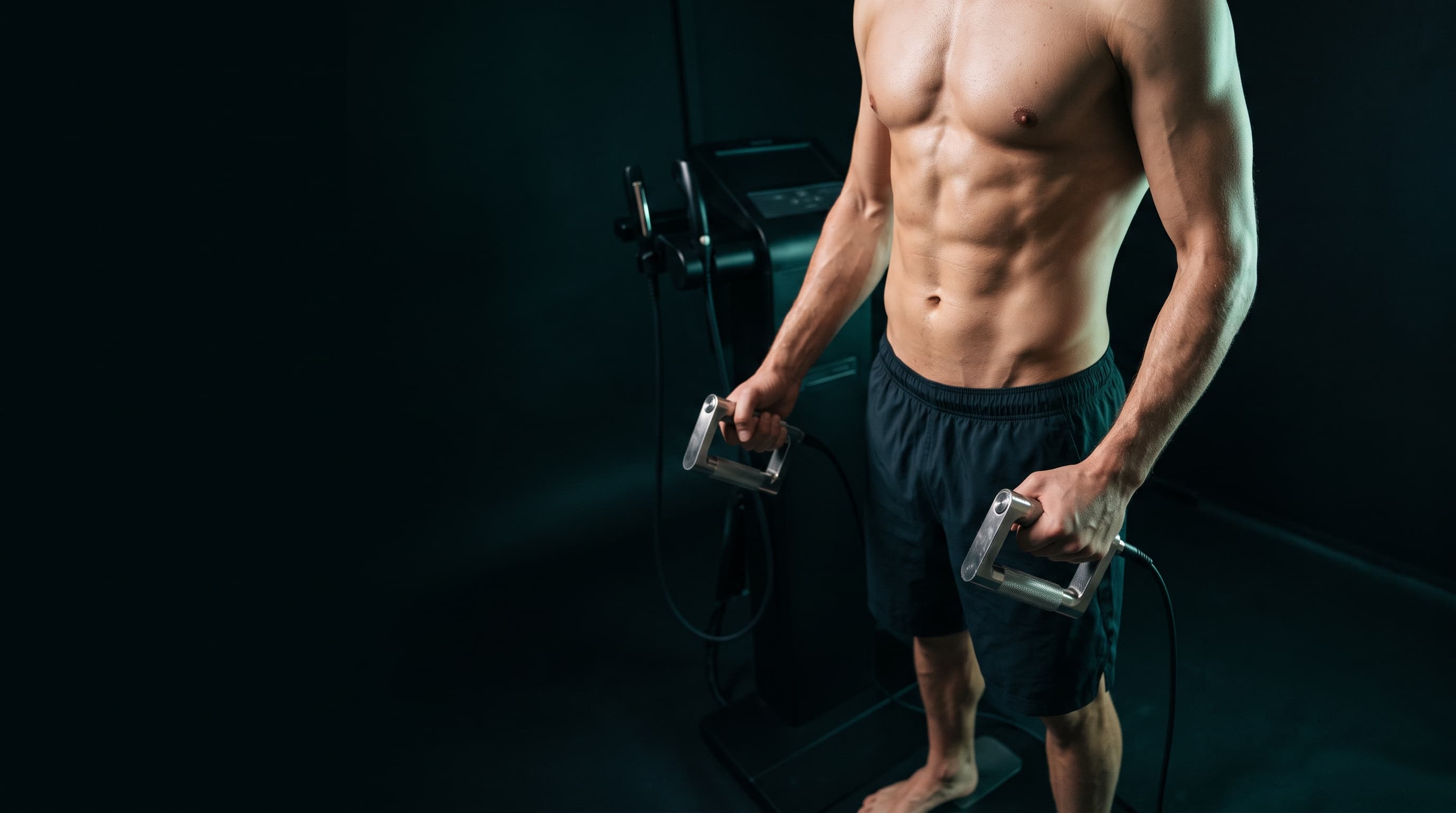
An InBody never measures fat. It measures how hard it is for a tiny electrical current to travel through you. That is bioelectrical impedance analysis, or BIA. Lean tissue is roughly three-quarters water and conducts current easily. Fat is nearly water-free and resists it. The machine sends current through your hands and feet, times the resistance, and runs that number through a regression equation to estimate fat mass.
Where InBody earns its reputation is in the hardware. Cheap scales push current up one leg and down the other, then guess at your upper body. InBody uses eight electrodes (both hands, both feet) and multiple frequencies, so it measures your arms, legs, and trunk as separate segments instead of extrapolating. As the ESPEN bioelectrical impedance guidelines spelled out two decades ago, the accuracy of any BIA device lives and dies by how well its equation and electrode setup match the body in front of it (Kyle et al., 2004). Multi-frequency segmental analysis is simply a better setup than a two-electrode scale. That is real, and it is why gyms and clinics buy them.
But better than a bathroom scale is not the same as accurate.
The Precision-Versus-Accuracy Gap
Here is the finding that reframes everything. Validation studies keep showing two things at once: InBody-class devices correlate almost perfectly with DEXA, and they are also biased against it.
A 2024 reliability study in Frontiers in Nutrition is a clean example. Test-retest reliability for percent body fat was nearly flawless, with intraclass correlations at or above 0.998. Yet compared against DEXA, the same multi-frequency BIA carried a systematic offset in percent body fat of roughly negative four points, with a spread of about three points around that (Frontiers in Nutrition, 2024). Other head-to-head work echoes the correlation half of the story: multi-frequency InBody devices routinely post correlations of r around 0.97 or higher with DEXA for fat mass and lean mass, including a 2021 validation of the InBody 270 that found associations of r equals 0.97 to 0.99 (International Journal of Environmental Research and Public Health, 2021).
Read those two facts together and the picture snaps into focus. A correlation of 0.97 means the machine ranks people correctly and tracks direction beautifully. A four-point offset means the specific number on your sheet can sit several points away from what DEXA would call your true body fat. Precise, meaning it gives you nearly the same answer every time. Not accurate, meaning that repeatable answer is shifted off true.
This is the same tension we cover in our pillar breakdown of body-fat measurement methods: every field method trades absolute truth for convenience, and the smart move is to know exactly which kind of error you are buying.
Hydration Is the Wildcard
Because BIA is really a water measurement wearing a fat-percentage costume, anything that moves your body water moves the reading. This is the single biggest reason two scans a few days apart can disagree.
The research is genuinely mixed here, which is itself instructive. On one hand, a 2020 study in Medicine found that drinking water before a scan inflated fat-mass estimates by several percentage points, more in some conditions than others. On the other hand, a 2021 study in BMC Public Health deliberately violated the standard prep rules (eating, drinking, exercising beforehand) and found the changes in percent fat were small, on the order of negative two to under one point, and often not statistically meaningful across devices.
The honest read: normal daily hydration swings usually nudge your InBody number by a point or two, not ten. That is small enough to ignore for a one-off curiosity scan and large enough to wreck a comparison if you scan dehydrated one week and bloated the next. The error is not random noise you can average away. It is a lever you control.
How to Actually Use Your InBody Number
Stop treating the printout as a verdict and start treating it as a data point in a series. That flips a flawed absolute into a strong relative measurement, which is exactly what it is good at.
- Use the same machine every time. Different models run different equations. An InBody 570 and an InBody 770 are not interchangeable, and neither matches your home scale. Pick one device and stick with it.
- Standardize the conditions. Morning, fasted, after using the bathroom, before training, similar hydration. The 2021 prep study suggests you do not need to be religious about it, but consistency removes the one variable you fully control.
- Ignore single-scan swings, watch the four-to-six-week slope. One reading tells you almost nothing. Five readings across six weeks, taken the same way, draw a trend line that is hard to fake. That slope is the signal.
- Cross-check against a tape measure and the mirror. When body fat, waist circumference, and progress photos all point the same direction, you can trust the direction even while distrusting the decimal.
If you do not have regular InBody access, the same logic applies to any consistent field method. We walk through the cheaper options in how to track body fat at home, and if you are weighing a clinic scan, DEXA scan alternatives covers how the trade-offs stack up. For a quick starting estimate before any scan, our body-fat calculator gets you in the ballpark from tape measurements.
The Bottom Line
An InBody scan is a precision instrument pointed at a moving target. The correlation with DEXA is real, the hardware is legitimately better than a bathroom scale, and the test-retest reliability is close to perfect. That last trait is the one that matters for anyone doing a recomp, a cut, or a lean bulk, because you do not need to know your exact body fat to know whether it is dropping. You need the same measurement, taken the same way, over enough weeks to see a slope.
That is where Protokl comes in. Instead of chasing a single number, Protokl logs your body-composition data over time, smooths the hydration noise into a clean trend, and ties it to your training and nutrition so you can see whether what you are doing is actually working. One InBody reading is a snapshot. A tracked trend is the truth. Point Protokl at the trend and let the daily printouts stop running your emotions.
Post to Instagram / TikTok
Tap Share, choose Instagram or TikTok, and this 1080×1080 card loads straight into the post composer — ready to publish. Add your caption and point your bio link back here, since links aren’t tappable inside IG/TikTok posts.
Related reading
- What Is Lean Body Mass? (And How to Calculate It Correctly)Lean body mass is the body-composition number that actually predicts training outcomes. Here is what it is, how to estimate it, and how to use it to set protein and calories.
- How to Measure Body Fat Percentage: DEXA vs Calipers vs VisualCompare body fat measurement methods. Learn which is most accurate (DEXA), which is cheapest (visual), and how each method compares.
- Are Smart Scales Accurate for Body Fat? What the Research SaysSmart scales measure weight well but body-fat readings can miss by 4-8 points. Here is what the validation studies show and how to use the number anyway.
Want this as a daily protocol?
Protokl builds personalized workout and nutrition plans around your body composition, goals, and experience level. Science-backed. AI-powered. Syncs with Apple Health.
Get Protokl →