Apple Watch Training Load for Lifting: How to Make It Actually Useful
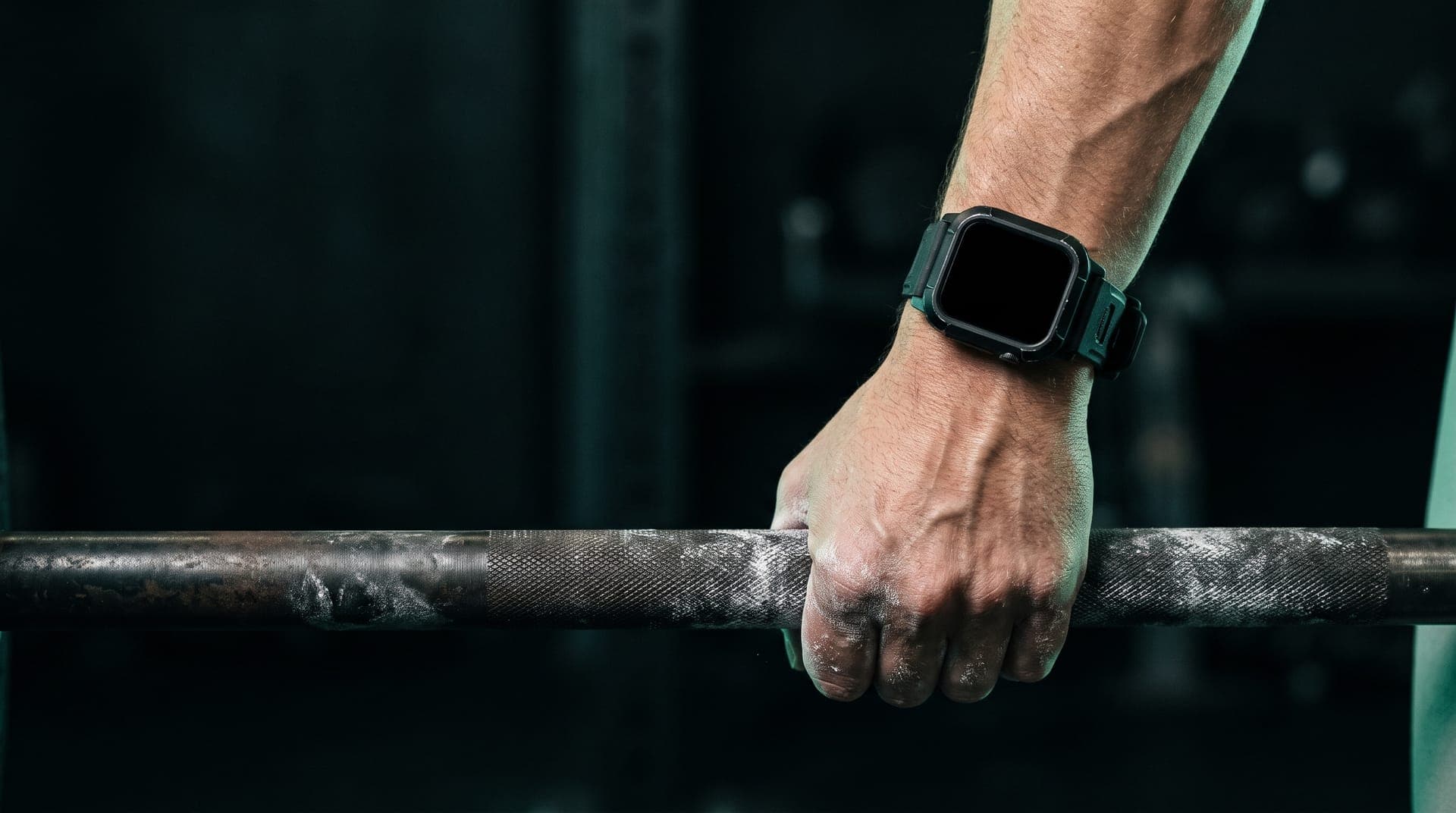
TL;DR: Apple Watch Training Load is effort (1 to 10) multiplied by workout duration, with your last 7 days compared against your last 28. It auto-rates runs, rides, and swims, but strength training needs you to enter the effort yourself. Rate lifting sessions honestly, based on how close to failure you trained, and the trend becomes a useful early warning. Short stretches of "Above" are normal during a hard block. Weeks of "Well Above" alongside stalling lifts and worse sleep mean it's deload time.
Apple added Training Load in watchOS 11, and if you lift, you've probably seen the little prompt asking you to rate a workout from 1 to 10. Most people tap something random, or dismiss it. That one habit is the difference between a feature that tells you nothing and one that genuinely helps you manage fatigue.
Here's how it works, where it breaks for lifters, and how to fix it.
How Training Load Is Calculated
The math is simple. Every workout gets an effort rating from 1 (easy) to 10 (all out). The watch multiplies that rating by the workout's duration. Add those up over 7 days and you have your acute load. Do the same over 28 days and you have your baseline.
The Fitness app then shows where your 7-day load sits relative to the 28-day baseline:
| Label | 7-day load vs 28-day baseline | |---|---| | Well Below | 50% or more below | | Below | 21 to 49% below | | Steady | Within 20% either way | | Above | 21 to 49% above | | Well Above | 50% or more above |
You need 28 days of logged workouts before the baseline exists. They don't have to be consecutive.
This isn't something Apple invented. It's a consumer version of the session-RPE method that sports scientists have used for two decades: rate the session's difficulty, multiply by minutes, and you have a usable load number (Foster et al., 2001). A large review found session-RPE tracks well with heart-rate and other internal load measures across many sports (Haddad et al., 2017). The 7-vs-28 comparison is the acute:chronic idea popularized in team sports research (Gabbett, 2016).
Why It Gets Lifting Wrong by Default
For running, cycling, and swimming, the watch estimates effort on its own using heart rate, pace, and elevation. For strength training, it doesn't even try. It asks you.
That's actually the right call. Heart rate is a poor proxy for lifting effort. A set of five heavy squats at two reps from failure is brutal on your muscles and nervous system, yet your heart rate might barely crack the zone a brisk walk gets you to. We covered why in detail in Apple Watch heart rate accuracy for weightlifting. An auto-rating based on heart rate would badly underestimate a heavy strength day.
The problem is what lifters do with the prompt. Three common mistakes:
- Skipping it. An unrated workout adds little or nothing to your load, so your lifting basically disappears from the picture. Your load then reflects only cardio.
- Rating everything 7. Same number every session means the score just tracks how many minutes you spent in the gym, which says nothing about how hard you trained.
- Rating by mood. Tired and grumpy means 9, good day means 5. That tracks how you felt walking out, not what the session actually demanded.
Garbage in, garbage out. Fix the input and the output becomes useful.
How to Rate a Strength Session
Anchor your rating to proximity to failure, which you're probably already thinking about if you use RIR. Research shows that rating effort by reps in reserve gives lifters a much more consistent scale than a vague "how hard was that" (Helms et al., 2016), and session-RPE has been validated specifically for resistance training (Day et al., 2004).
A simple mapping that works:
| Session description | Rating | |---|---| | Technique work, deload, everything 4+ reps from failure | 3 to 4 | | Normal session, most sets at 2 to 3 RIR | 5 to 6 | | Hard session, key sets at 0 to 1 RIR, high volume | 7 to 8 | | Max testing, brutal high-volume day, you're wrecked | 9 to 10 |
Two rules make this work. First, rate it 10 to 30 minutes after you finish, which is the window Foster's original method used, so you're not inflating it while still out of breath. Second, rate the whole session, not your worst set. If you need a refresher on judging reps in reserve, read how to calibrate RIR.
Do this for 28 days and your baseline actually reflects your lifting.
What the Labels Mean for a Lifter
Steady is where most of your training should live. You're doing roughly what you've been doing, which is fine as long as your lifts are still going up. Progressive overload happens inside a steady load, because you're adding small amounts of weight or reps, not doubling your weekly work.
Above is normal during the hard weeks of a training block or when you add a conditioning session. It's not a warning by itself.
Well Above is the one to pay attention to. A 50%+ jump in load over a week usually means you added a lot at once: a new program, extra days, a sudden cardio push. Plenty of people survive it, but it's when niggles and stalled lifts tend to show up.
Below or Well Below during a deload is exactly what you want. If you're not deloading and you're sitting here for weeks, your training has quietly drifted.
Don't Treat the Ratio as Gospel
A fair warning. The acute:chronic ratio has been heavily criticized. Impellizzeri et al. (2020) showed the injury-prediction claims built on it have real statistical problems, partly because the 7-day window sits inside the 28-day one. A label on your watch can't predict an injury, and you shouldn't train scared of the "Above" badge.
Use it as one input, not a verdict. The time to act is when several signals line up:
- Training Load has been Above or Well Above for two or more weeks
- Your top sets are stalling or going backward
- Resting heart rate is creeping up and HRV is trending down
- Sleep is worse and you're dreading sessions
Two or three of those together is a strong case for a lighter week. Our guide to deload weeks covers how to cut volume without losing progress.
Getting More From It
A few practical tweaks:
- Log warm-ups and accessory work inside the same workout rather than starting new ones. One session, one rating.
- Edit ratings later if you got it wrong. You can change the effort score in the Fitness app on iPhone.
- Rate walks and easy cardio honestly low. A 60-minute walk at effort 2 shouldn't swamp a 50-minute lifting session at 8.
- Watch the trend over weeks, not the daily wobble. One big Saturday will push you Above for a few days, and that's meaningless on its own.
The Bottom Line
Training Load is a solid idea with a weak default for lifters, because strength sessions depend on a rating most people skip or guess. Rate every lifting session against how close to failure you trained, give it 28 days, and you get a reasonable early warning for when you've piled on more than you can recover from. Just don't confuse a label with a diagnosis.
The bigger gap is that Training Load knows your effort but not your results. It can't tell whether your bench is climbing, whether you're holding muscle on a cut, or whether that "Well Above" week actually moved anything. Protokl reads your workouts, heart rate, HRV, and sleep from Apple Health, adjusts each session based on what you actually lifted, and puts your load next to your strength and body-composition trend, so you can see whether the work is paying off or just piling up. If you want to see where that trend leads, run your numbers through the physique forecast tool.
Post to Instagram / TikTok
Tap Share, choose Instagram or TikTok, and this 1080×1080 card loads straight into the post composer — ready to publish. Add your caption and point your bio link back here, since links aren’t tappable inside IG/TikTok posts.
Related reading
- How to Train Around an Injury Without Losing MuscleAn injury takes one movement away from you, not your whole physique. Here's what the disuse research says about how fast muscle actually goes, and the four levers that keep almost all of it while you heal.
- GZCLP Review: The Best Beginner Program Nobody RecommendsGZCLP fixes the two things that break StrongLifts 5x5: not enough volume and no way to fail gracefully. Here's how the three-tier structure works, where it still falls short, and who should run it.
- What Is a Good Resting Heart Rate? (And What Lifting Does to It)What counts as a good resting heart rate, why it matters for long-term health, how much lifting and cardio actually lower it, and how to use your Apple Watch trend to spot fatigue before it costs you a session.
Want this as a daily protocol?
Protokl builds personalized workout and nutrition plans around your body composition, goals, and experience level. Science-backed. AI-powered. Syncs with Apple Health.
Get Protokl →