Thermic Effect of Food: Does Protein Actually Burn Calories?
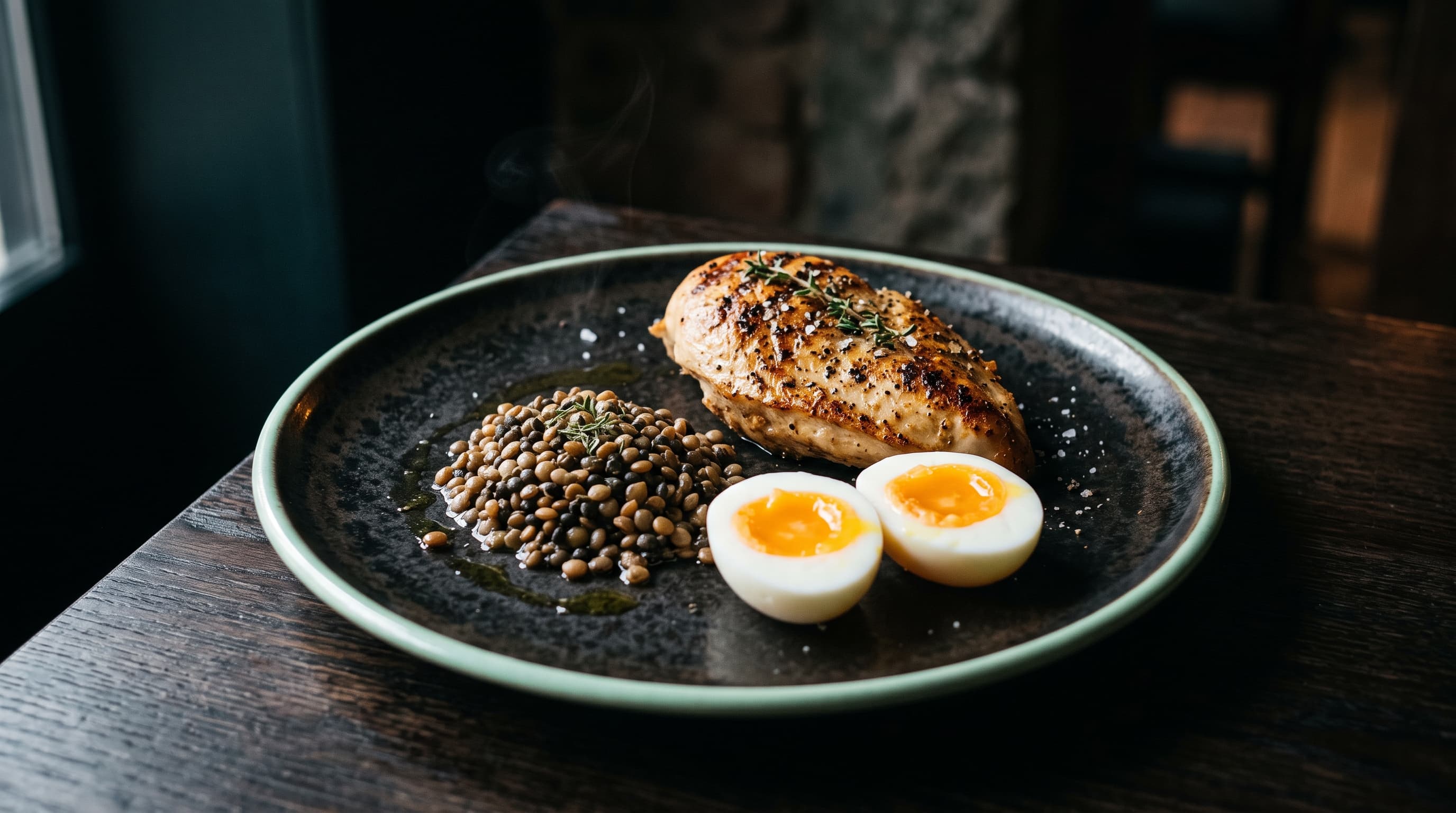
TL;DR: Digesting protein burns roughly 20-30% of its own calories, versus 5-10% for carbs and 0-3% for fat. On a high-protein diet that's an extra 80-100 calories a day of "free" expenditure, and it's the most reliable reason high-protein diets outperform on fat loss.
Yes, protein burns calories. Not in a metabolism-booster-supplement way. In a boring, well-measured, thermodynamics way. Your body spends energy to break food down, absorb it, and either store it or put it to work, and protein is by far the most expensive macronutrient to process. That cost has a name: the thermic effect of food, or TEF.
Most people never account for it, which means their real calorie budget is off in a direction that actually helps them. Here's how big the effect is and how to use it.
What TEF Actually Is
Every meal triggers a temporary bump in energy expenditure while your body digests it. TEF is that bump. Across a full day it accounts for roughly 10% of your total energy expenditure in someone eating at maintenance (Westerterp, 2004). It's the third piece of your metabolism, after resting metabolic rate (the big one, usually 60-70%) and the calories you burn moving around.
The part that matters for planning is that TEF is not the same for every macronutrient. The energy cost of processing each one is wildly different:
- Protein: 20-30% of its calories burned during digestion
- Carbohydrate: 5-10%
- Fat: 0-3%
- Alcohol: 10-30%, though that comes with other problems
Those numbers come from decades of indirect calorimetry work, where researchers measure oxygen consumption after a meal (Westerterp, 2004). Protein is expensive because your body cannot store it the way it stores fat or carbs. Amino acids have to be deaminated, converted, and shuttled into protein synthesis or energy pathways, and all of that machinery runs on ATP. The constant breakdown and resynthesis of body proteins, called protein turnover, is metabolically costly by design.
Run the Numbers
Say you eat 2,200 calories a day. Split it two ways.
A low-protein version, maybe 80g of protein (320 calories from protein), nets you a TEF of somewhere around 130-160 calories across the day once you blend all three macros.
A high-protein version at 180g of protein (720 calories from protein) pushes daily TEF up toward 220-260 calories. The gap is real energy you spent doing nothing but digesting. Over a week that difference is in the ballpark of 600-800 calories, which is a meaningful chunk of a fat-loss deficit that costs you zero willpower.
This isn't a fringe result. A critical review by Halton and Hu (2004) found that in every one of the six studies that measured TEF as a percentage of intake, the higher-protein diet produced greater energy expenditure than the lower-protein comparison. The direction of the effect is about as settled as nutrition science gets.
The Overfeeding Study That Nails It
The cleanest demonstration is an overfeeding trial by Bray and colleagues (2012), published in JAMA. They deliberately overfed people by about 950 calories a day for eight weeks, holding total calories constant but varying protein: low (5%), normal (15%), or high (25%) of intake.
Resting energy expenditure barely moved in the low-protein group. It rose about 160 calories a day in the normal-protein group and roughly 227 calories a day in the high-protein group. Same calorie surplus, very different metabolic response. The high-protein groups also put on more lean mass while gaining a similar amount of fat. Protein didn't just cost more to digest, it changed what the excess calories became.
One honest caveat: TEF is measured per meal, and a common worry is that your body "adapts" and the effect fades. Sutton and colleagues (2016) tested exactly this and found no evidence of metabolic adaptation in the thermic effect of food from higher protein intake. The tax doesn't get refunded.
Why This Matters for Your Calorie Budget
Here's the practical problem. Standard calorie targets treat a calorie as a calorie. Eat 1,800, burn your TDEE, lose the difference. But two people eating 1,800 calories with very different protein intakes are not in the same energy balance. The high-protein eater is quietly burning an extra 80-100 calories a day just processing their food, on top of the better satiety and muscle retention protein already buys them.
That's why "just eat less" is a worse instruction than "eat this much protein, then fill the rest." It's also why static calorie math drifts from reality over time. If your plan doesn't account for how your macros shift your expenditure, you're working from a number that's slightly wrong in a way you can't see. This is the same reason adaptive TDEE tracking beats static calculators: your real energy expenditure depends on what you eat and how your body responds, not on a formula frozen at day one.
How to Actually Use TEF
Don't overthink it. TEF is a reason to prioritize protein, not a lever you tune directly. A few things that follow from the science:
- Anchor every meal around protein. The thermic bump scales with protein dose, and the satiety and muscle-retention benefits stack on top. Most people recomping well land between 0.7 and 1.0 grams per pound of bodyweight. See how much protein you actually need per day to set your target.
- Don't chase TEF with tiny frequent meals. Meal frequency has a negligible effect on total daily TEF once total intake is held constant. Three meals or six, the daily sum is roughly the same. Eat on whatever schedule keeps you full.
- Count it as a tailwind, not a strategy. TEF won't out-run a sloppy diet. It's an 80-100 calorie edge that quietly compounds when your protein is already high.
- Whole-food protein is fine. You don't need special foods. Chicken, eggs, dairy, fish, legumes, and a protein shake all trigger the same machinery.
If you want to see how protein reshapes your numbers, plug your bodyweight and goal into the macro calculator, then set your intake from there. And if you're setting up a full plan, start with how to calculate your TDEE so your baseline is honest before you subtract.
The Bottom Line
Protein burns calories to digest, and it's not trivial. Roughly a quarter of every protein calorie is spent just processing it, the effect doesn't fade with time, and on a high-protein diet it adds up to a real daily advantage. It's one of the least glamorous reasons high-protein diets win, and one of the most dependable.
Protokl builds this into your plan automatically. Instead of treating your calorie target as a fixed number, it learns your actual energy expenditure from your weight trend and intake, so the protein you eat is reflected in the budget you get, not lost to a generic formula. Set your protein, log your food, and let the math keep itself honest. See how Protokl handles your real TDEE.
Sources: Westerterp KR. Diet induced thermogenesis. Nutr Metab (Lond). 2004. Halton TL, Hu FB. The effects of high protein diets on thermogenesis, satiety and weight loss: a critical review. J Am Coll Nutr. 2004. Bray GA et al. Effect of dietary protein content on weight gain, energy expenditure, and body composition during overeating. JAMA. 2012. Sutton EF et al. No evidence for metabolic adaptation in thermic effect of food by dietary protein. Obesity. 2016.
Post to Instagram / TikTok
Tap Share, choose Instagram or TikTok, and this 1080×1080 card loads straight into the post composer — ready to publish. Add your caption and point your bio link back here, since links aren’t tappable inside IG/TikTok posts.
Related reading
- How to Manage Hunger on a Cut Without Eating More CaloriesHunger is the reason most cuts fail, and it's more controllable than people think. Here's what actually moves appetite at a fixed calorie target: protein dose, food volume, processing level, and sleep.
- How to Break a Weight Loss PlateauStuck at the same weight for weeks? Most plateaus aren't metabolic. Here's how to diagnose the real cause in order, and what to do when adaptation is genuine.
- Should You Eat Protein Before Bed? What the Casein Research Actually ShowsA pre-sleep protein shake does raise overnight muscle building. But when total daily protein is matched, bedtime protein beats daytime protein by roughly nothing. Here's how to use it.
Want this as a daily protocol?
Protokl builds personalized workout and nutrition plans around your body composition, goals, and experience level. Science-backed. AI-powered. Syncs with Apple Health.
Get Protokl →