How Long Does It Take to See Results From Working Out?
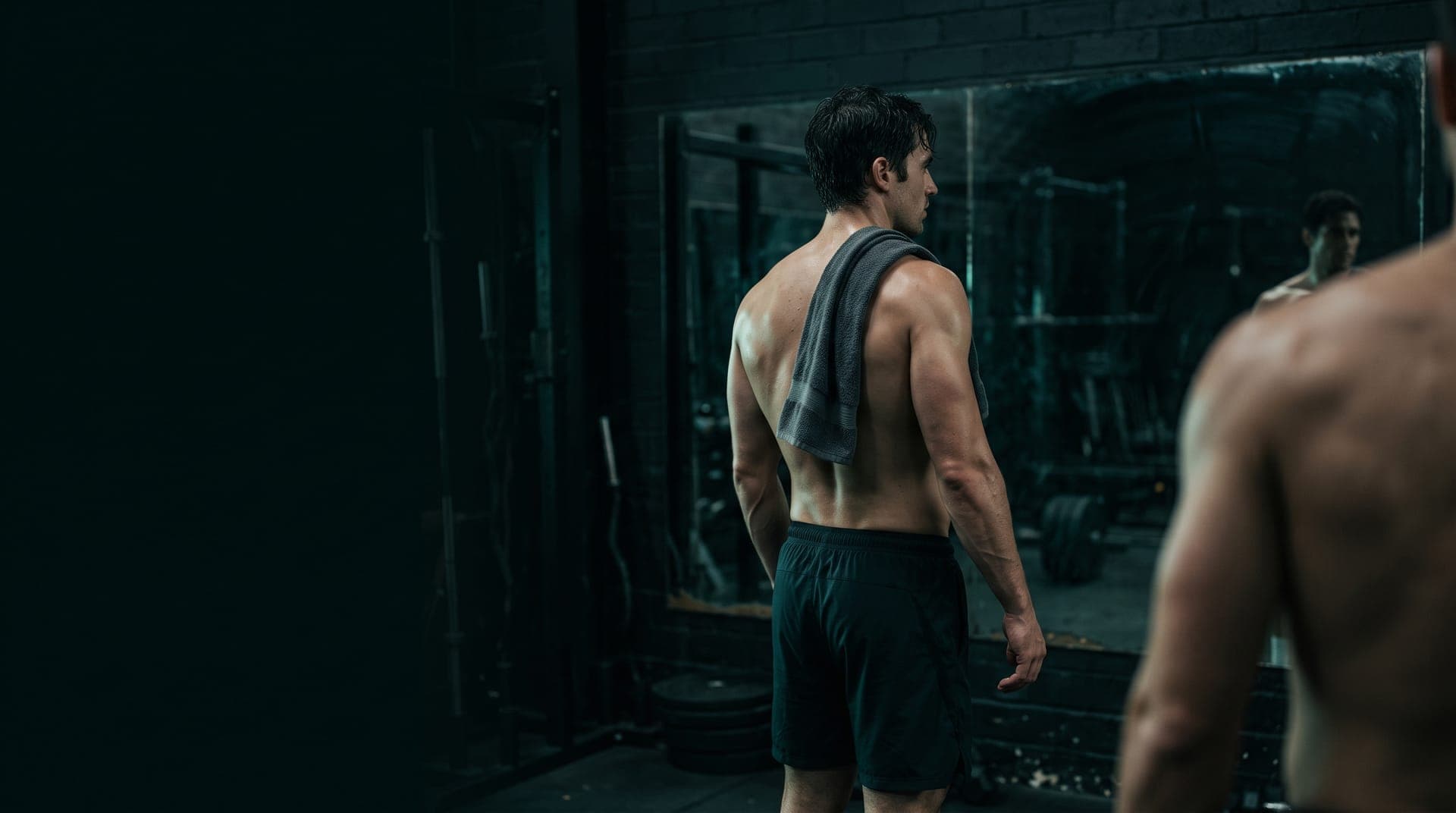
TL;DR: Strength improves within 2 to 4 weeks, mostly from better coordination. Actual muscle growth starts in about 3 to 4 weeks but is invisible at first. Most people see a difference in the mirror at 8 to 12 weeks, and friends notice at 3 to 6 months. If you're tracking the right numbers, you'll know it's working well before you can see it.
The honest answer is that results arrive in layers, and the first layers are invisible. That's why so many people quit around week five. They're working, they're changing, and they can't see any of it.
Here's what actually happens, in order, and what to measure so you don't bail right before it pays off.
Weeks 1 to 4: you get stronger, not bigger
Your first strength gains are mostly neural. Your brain gets better at recruiting muscle fibers, coordinating the muscles around a joint, and turning off the ones that fight the movement. The classic evidence comes from Moritani and deVries (1979), who showed that early strength gains in untrained people were driven almost entirely by neural factors, with hypertrophy taking over later.
In practice, a beginner can add 20 to 30% to a lift in the first month without any meaningful change in muscle size. That's real progress. It's just not the kind you can see.
This is also why "I'm stronger but I look the same" is completely normal for the first several weeks. If your numbers are going up on a sensible progressive overload plan, you're on track.
Weeks 3 to 6: muscle starts growing (but you can't see it)
Muscle growth begins earlier than most people assume. Seynnes et al. (2007) measured quadriceps size with MRI and found a significant increase after just 20 days of training, about 3.5%.
There's a catch. Damas et al. (2016) showed that some of the size increase in the first few weeks is swelling from muscle damage, not new contractile tissue. Once they accounted for that, real hypertrophy was clearly underway by roughly week 10, with the early "growth" partly being edema.
Either way, a few percent of extra size in one muscle doesn't change how you look in a shirt. You need that to compound for a while.
Weeks 8 to 12: the mirror starts to agree
This is the window where most people first notice visible change. Shoulders look a bit fuller, arms fill sleeves slightly differently, and your posture often improves because your upper back got stronger.
How visible it is depends heavily on body fat. The same muscle gain is obvious on someone at 12% body fat and nearly hidden on someone at 28%. If you're carrying more fat, the early visual wins usually come from a tighter waist rather than bigger muscles, especially if you're eating in a small deficit.
For beginners who start slightly overweight, this is the recomposition sweet spot: fat comes down while muscle goes up, and the scale barely moves. We break that timeline down further in how long body recomposition takes.
Months 3 to 6: other people notice
Friends and family tend to notice somewhere between three and six months. By then a new male lifter has often added several pounds of muscle, and a new female lifter a few pounds, which is enough to change shape rather than just detail.
This is also where newbie gains are still running at full speed. They don't last forever, and the rate drops sharply after the first year, which is covered in how long newbie gains last.
Why some people see results faster than others
The spread between individuals is huge. Hubal et al. (2005) put 585 untrained men and women through the same 12-week arm training program. Changes in biceps size ranged from a slight loss to a gain of almost 60%, and strength gains varied just as widely.
Most people land near the middle, but these factors move you around:
- Training status. Beginners respond fastest. If you've trained before, muscle memory helps you regain old size quickly.
- Body fat. Leaner people see changes sooner because there's less covering the muscle.
- Diet. Too little protein or a steep deficit slows muscle gain. Aim for roughly 1.6 g of protein per kg of bodyweight per day (Morton et al., 2018), and check yours with the protein calculator.
- Consistency. Three decent sessions a week for twelve weeks beats five perfect sessions a week for three weeks followed by a month off.
- Sleep and recovery. Short sleep blunts both fat loss and muscle retention, especially in a deficit.
- Genetics. Some of the variation in Hubal's data simply came down to the person. You can't change that, but you can stop comparing yourself to someone else's timeline.
What to track so you know it's working
The mirror is the worst early-stage measuring tool you have. You see yourself every day, lighting changes everything, and your brain adapts to gradual change. Use these instead:
- Strength on your main lifts. If your reps or load are climbing week to week, you're adapting. This is the first signal and the most reliable one early on.
- Waist measurement. Measured at the navel, same time of day, once a week. A shrinking waist with stable or rising weight is a strong sign of recomposition.
- Weekly average bodyweight. Daily weight swings 1 to 2 kg from water and glycogen. Compare weekly averages, not single mornings. Here's why the scale lies day to day.
- Progress photos every 4 weeks. Same lighting, same poses, same time. Comparing week 1 to week 12 side by side will show you what the mirror can't.
If strength is flat for three or more weeks and your measurements haven't moved in six, that's a real signal to change something: more volume, more food, better sleep, or a smarter program.
The bottom line
Expect to feel stronger in 2 to 4 weeks, to have measurable muscle growth by week 4, to see it yourself around week 8 to 12, and for others to notice by month 3 to 6. The people who get results are mostly the ones who keep going through the invisible phase.
The hardest part of that phase is not knowing whether any of it is working. Protokl was built for exactly that stretch. It combines your lifts, weight trend, and body measurements into one picture, shows you which signals are moving, and forecasts where your body composition is heading at your current pace. So instead of guessing at week five, you can see the trajectory and keep going. You can also try the free physique forecast to get a rough timeline for your own goal.
Post to Instagram / TikTok
Tap Share, choose Instagram or TikTok, and this 1080×1080 card loads straight into the post composer — ready to publish. Add your caption and point your bio link back here, since links aren’t tappable inside IG/TikTok posts.
Related reading
- GZCLP Review: The Best Beginner Program Nobody RecommendsGZCLP fixes the two things that break StrongLifts 5x5: not enough volume and no way to fail gracefully. Here's how the three-tier structure works, where it still falls short, and who should run it.
- How to Take Progress Photos That Actually Show ChangeMost progress photos are useless because the lighting, pose, and time of day change more than the body does. Here is the protocol that makes the comparison honest.
- How to Track Macros for Beginners: The Complete GuideLearn how to track macros from scratch. Covers what macronutrients are, how to calculate your targets, practical tracking methods, and the easiest way to log meals without weighing everything.
Want this as a daily protocol?
Protokl builds personalized workout and nutrition plans around your body composition, goals, and experience level. Science-backed. AI-powered. Syncs with Apple Health.
Get Protokl →