Is 1,200 Calories Too Low? What the Number Actually Means for You
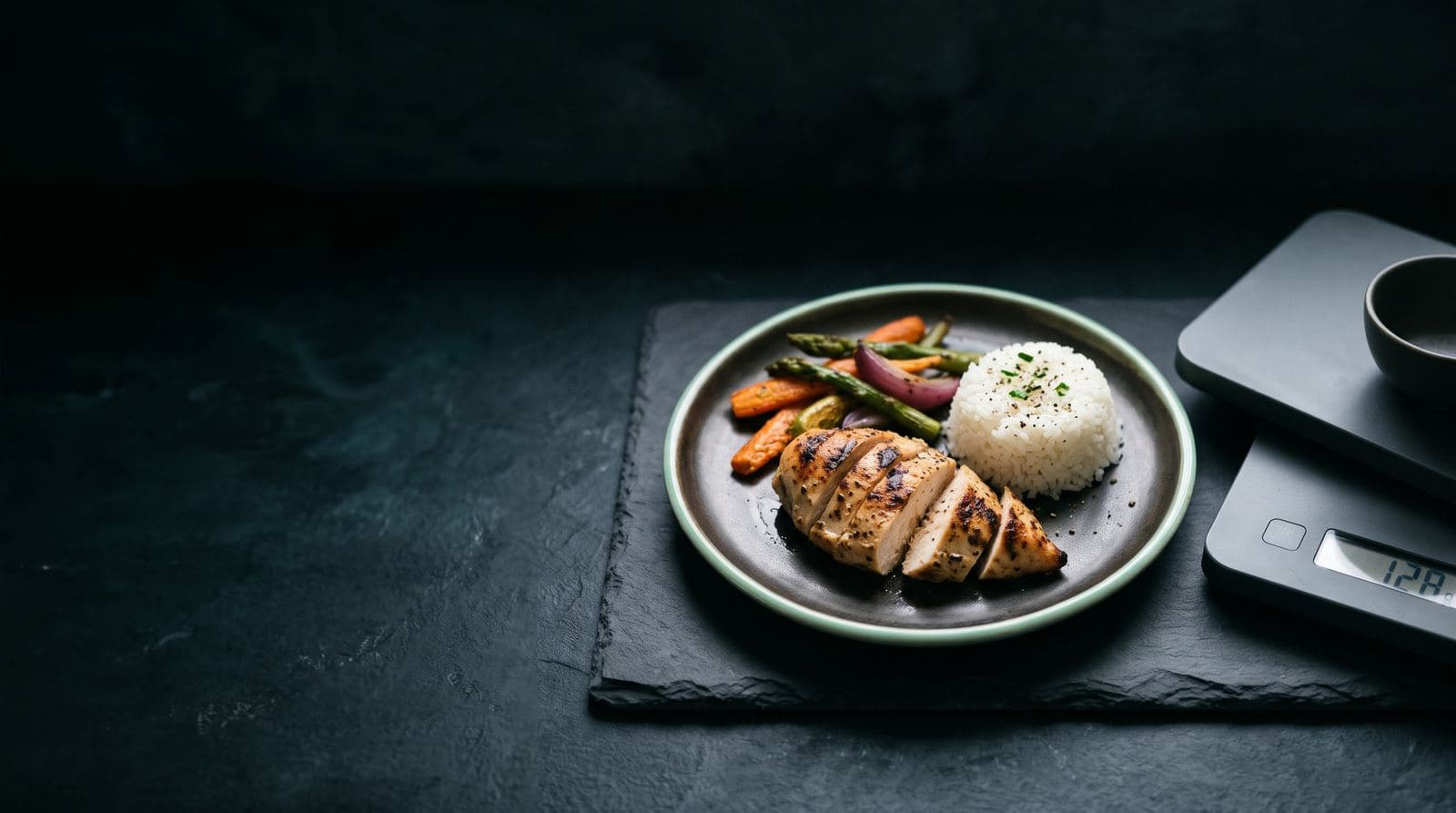
TL;DR: For most adults who train, 1,200 calories a day is too low. The number comes from a 1918 diet book and survives as a convenient floor, not as anything calculated from your body. A good cut sits 300 to 500 calories below your actual maintenance, keeps protein high, and loses roughly 0.5 to 1% of bodyweight per week. If you only lose weight at 1,200, the problem is usually your maintenance estimate, not your metabolism.
Type almost any goal into a free calorie app and there's a good chance it hands you 1,200. Lose a pound a week? 1,200. Lose two? Still 1,200, because the app won't go lower. It's become the default target for anyone trying to lose weight, especially women.
The trouble is that 1,200 was never designed for you. It's a floor, and most people who lift are nowhere near the situation where a floor is the right target.
Where 1,200 Came From
The number goes back to Lulu Hunt Peters' 1918 bestseller Diet and Health, which popularized calorie counting in America and suggested 1,200 a day for weight loss. It stuck because it's round, easy to remember, and keeps most people above outright starvation.
Modern guidance mostly repeats it as a minimum. Harvard Health Publishing, for example, advises that intake shouldn't drop below about 1,200 calories a day for women or 1,500 for men without medical supervision. That's a safety line. It tells you where trouble starts, not where your target should be.
The Real Question: How Big Is Your Deficit?
Calories only mean something relative to what you burn. 1,200 for a 5'2" sedentary woman with a maintenance of 1,600 is a 400-calorie deficit. Perfectly reasonable. 1,200 for a 5'8" woman who lifts four days a week and walks 9,000 steps, with a maintenance closer to 2,300, is an 1,100-calorie deficit. That's almost half her energy needs, every day.
Same number, completely different diet. That's why the useful question isn't "is 1,200 too low?" but "how far below my maintenance is it?" If you don't know your maintenance, start with our guide on how to calculate TDEE, then check it against your real weight trend for two or three weeks.
A practical target for most lifters:
- Deficit: 300 to 500 calories below maintenance (roughly 15 to 25%).
- Rate of loss: about 0.5 to 1% of bodyweight per week.
- Protein: around 0.8 to 1 gram per pound of bodyweight, higher when you're lean.
Run your numbers through the cut calculator and see where you land. For most active people it won't be 1,200.
What Happens When You Go Too Low
You lose more muscle
Speed matters. In a study of elite athletes, Garthe et al. (2011) compared a slower weight loss of about 0.7% of bodyweight per week against a faster 1.4%. The slower group kept their lean mass and actually gained strength. The faster group didn't. Big deficits pull more of the loss from muscle, and diet-only weight loss can take roughly a quarter of the lost weight from lean tissue (Weinheimer et al., 2010).
That's the part people miss. A steep cut can look great on the scale and terrible in the mirror. If you're trying to end lean rather than just lighter, read how to lose fat and keep muscle.
Your training falls apart
At very low intakes there isn't much room for carbs after protein, and your sessions show it. Loads drop, reps stall, and recovery between sessions gets worse. Lifting is the signal that tells your body to keep muscle during a cut. Undermine the lifting and you undermine the whole point of dieting while training.
Hormones and energy availability take a hit
Researchers look at "energy availability": the calories left after exercise, relative to your lean mass. Loucks and Thuma (2003) found that pushing it below about 30 kcal per kilogram of fat-free mass disrupted reproductive hormones in women within days. A woman who trains hard on 1,200 calories can get there easily. Missed periods, poor sleep, low libido, and being cold all the time are signals to eat more, not to push through.
Hunger and adaptation make it harder to stick to
Keys' Minnesota Starvation Experiment (1950) famously had men eating about 1,570 calories a day, more than 1,200, and they became obsessed with food, irritable, and lethargic. Your body also defends against big deficits by cutting spontaneous movement and becoming more efficient (Rosenbaum and Leibel, 2010). The harder you cut, the stronger that pushback gets. More on that in our piece on metabolic adaptation.
When 1,200 Can Be Fine
It isn't automatically wrong. 1,200 can be a sensible target if:
- You're shorter, lighter, and not very active, so your maintenance is roughly 1,500 to 1,700.
- It's a short, planned phase, like a two to four week mini cut, not your default for months.
- You're working with a doctor on a supervised plan, which is where lower intakes belong.
If you fit the first category, 1,200 may only be a moderate deficit. Just make sure protein still lands where it should and your strength holds.
"But I Only Lose Weight at 1,200"
This is the most common reason people get stuck there, and it usually comes down to one of three things.
Your maintenance estimate is too high. Calculators and watches often overestimate burn. Use your actual weight trend at a known intake to find your real number.
Your logging is off. Cooking oils, sauces, weekends, and "bites" add up. A 1,200 day can quietly become a 1,700 day.
Water is hiding fat loss. Cortisol, sodium, training soreness, and the menstrual cycle can mask fat loss on the scale for a week or two. Look at a multi-week trend before you cut deeper.
The fix in each case is better data, not fewer calories.
The Bottom Line
1,200 calories is a safety floor from 1918, not a personalized target. For most people who lift, it's too aggressive: it costs muscle, wrecks training, and invites a rebound. Set your deficit from your real maintenance, aim for 0.5 to 1% of bodyweight a week, keep protein high, and let the trend tell you whether to adjust.
That's the hard part to do by hand, which is why Protokl does it for you. It sets your calorie target from your real weight trend instead of a fixed formula, adjusts it as your body changes, and tracks body composition alongside your training. So you can see whether your cut is coming off fat, and whether you could be eating more and still getting there.
Post to Instagram / TikTok
Tap Share, choose Instagram or TikTok, and this 1080×1080 card loads straight into the post composer — ready to publish. Add your caption and point your bio link back here, since links aren’t tappable inside IG/TikTok posts.
Related reading
- How to Break a Weight Loss PlateauStuck at the same weight for weeks? Most plateaus aren't metabolic. Here's how to diagnose the real cause in order, and what to do when adaptation is genuine.
- How to Calculate Your TDEE Accurately (Not Just a Formula)Learn how to calculate your Total Daily Energy Expenditure using the Mifflin-St Jeor equation, why static calculators are often wrong, and how adaptive tracking gives you a more accurate number over time.
- How to Train in a Calorie Deficit (Without Losing What You Built)The program isn't what decides whether you keep muscle on a cut. The size of the deficit is. Here's what the training research actually supports: deficit ceiling, volume floor, protein target, and realistic performance expectations.
Want this as a daily protocol?
Protokl builds personalized workout and nutrition plans around your body composition, goals, and experience level. Science-backed. AI-powered. Syncs with Apple Health.
Get Protokl →