Does Muscle Soreness Mean Muscle Growth? What the Research Actually Says
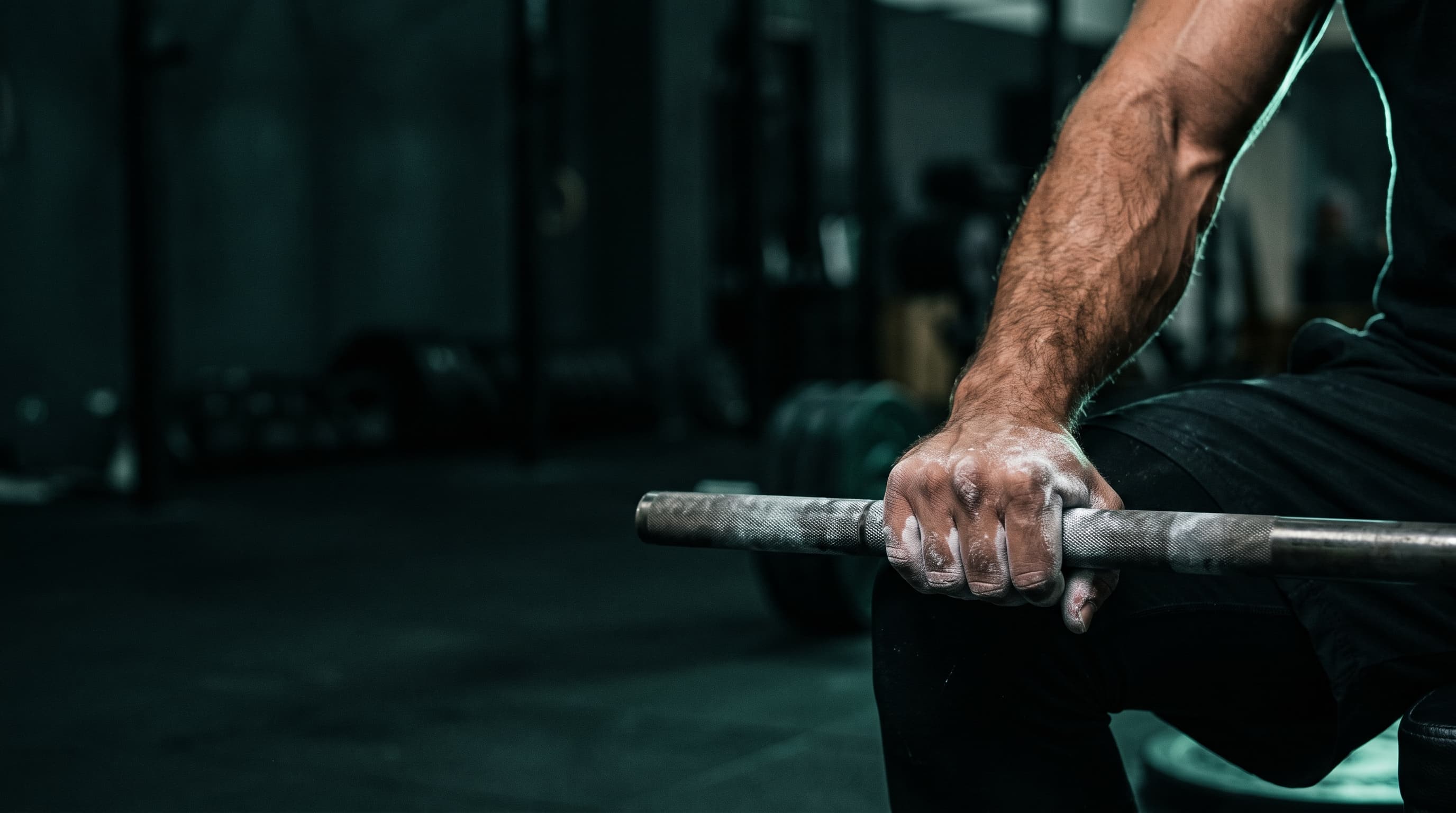
TL;DR: Delayed onset muscle soreness tells you a movement was unfamiliar or eccentric-heavy, not that you built muscle. The two can move together early on, but they decouple fast. Chasing soreness will steer your training toward novelty and damage instead of progressive overload, which is what actually drives growth. Track your working weights, your reps, and your body composition trend. Let soreness be a side effect, not the scoreboard.
You finish a session, wake up the next day barely able to sit down, and think: that one worked. The flip side feels worse. A smooth workout with zero soreness reads like a wasted hour. Both instincts feel obvious. Both are mostly wrong.
Soreness is one of the most misread signals in lifting. It's vivid, it shows up on schedule, and it feels like feedback. But when you line it up against what the research says about hypertrophy, the connection falls apart quickly. Here's what's really going on and what to watch instead.
What DOMS actually is
Delayed onset muscle soreness is the ache that peaks roughly 24 to 72 hours after a hard or unfamiliar session. It comes from mechanical stress to muscle fibers and connective tissue, which kicks off an inflammatory response that sensitizes the pain receptors in the area (Schoenfeld & Contreras, 2013). That's why the soreness arrives late and lingers. It's a downstream inflammatory signal, not a direct readout of how much muscle you stimulated.
Two things reliably crank up DOMS: novelty and eccentric loading. A movement your body hasn't seen in a while, or a lift with a long, loaded lowering phase, will leave you sore even at modest volume. That's a clue about where soreness comes from, and it's the first crack in the "sore equals growth" idea.
The repeated bout effect breaks the link
Do the same workout next week and you'll be noticeably less sore, even if you add weight or reps. This is the repeated bout effect, and it's one of the most consistent findings in exercise science (Nosaka and colleagues have documented it across decades of eccentric-exercise studies). Your muscle adapts to the specific stress and stops sending the same alarm.
Sit with that for a second. You're training harder, lifting more, and getting less sore. If soreness tracked growth, your gains would be evaporating exactly as your performance climbs. They aren't. The soreness is fading because the movement is familiar now, not because the stimulus disappeared. This single observation is enough to disqualify DOMS as a progress meter.
Soreness and growth decouple under the microscope
The lab work is even more direct. Damas and colleagues (2016, published in the Journal of Physiology) tracked muscle protein synthesis across a training program and found that early in training, the protein synthesis spike was largely directed at repairing muscle damage, not building new contractile tissue. Real hypertrophy only became measurable after the damage and soreness settled down over the first few weeks. In other words, the period when you're most sore is the period when the least net muscle building is happening.
Flann and colleagues (2011, Journal of Experimental Biology) ran a clever study where one group ramped into eccentric training gradually enough to avoid significant soreness and damage. They grew just as well as the group that got hammered. The "no pain, no gain" framing took a direct hit: you can build muscle without wrecking yourself first.
There's also the muscle-group problem. Delts and forearms rarely get very sore, yet they grow fine with proper training. Quads and hamstrings light up after almost anything. If soreness measured growth, your body would be a patchwork of overdeveloped legs and permanently underbuilt shoulders. It isn't, because soreness reflects a muscle's susceptibility to damage, not its growth potential.
What actually drives hypertrophy
Muscle grows in response to mechanical tension applied through a meaningful range of motion, accumulated across enough hard sets, and progressed over time. That's the engine. Soreness is exhaust, not horsepower.
The practical levers are well established:
- Progressive overload. Adding weight, reps, or quality sets over weeks is the non-negotiable driver. If the numbers aren't trending up, soreness won't save you. Start with how to use progressive overload if you don't have a system for this yet.
- Effort, kept honest. Training close enough to failure matters far more than how trashed you feel afterward. We cover the sweet spot in how close to failure you should train.
- Enough volume, not maximum volume. Total hard sets per muscle per week is a primary dial. More soreness from junk volume is not the goal. See how many sets per week to build muscle.
- A rep range you can load and control. Most hypertrophy work lives in a broad, flexible band, covered in the best rep range for muscle growth.
Notice what's missing from that list: soreness. You can hit every one of those targets and feel barely anything the next day, especially once you're trained.
When soreness is telling you something useful
Soreness isn't useless. It's just a different signal than people think.
Mild, short-lived soreness after introducing a new exercise or a harder phase is normal and fine. Soreness that's severe, lasts past three or four days, or keeps compounding week over week is a flag that your recovery isn't keeping up with your workload. That's a programming problem, and the fix usually isn't toughing it out. It's managing fatigue, often with a planned deload week.
The trap is the opposite reaction: deliberately chasing soreness by constantly swapping exercises, adding garbage volume, or leaning into extreme ranges just to feel the burn the next day. That biases your training toward novelty and damage and away from the boring, repeatable overload that actually builds you. Feeling destroyed is easy. Getting stronger on the same lifts month after month is the hard part that works.
Track these instead
If soreness is a bad scoreboard, you need a real one. Three signals beat it, and none of them require guessing how your hamstrings feel:
- Working loads and reps. Are you handling more weight or more reps on your main lifts than you were a month ago? That's the most direct evidence the stimulus is landing. A simple way to anchor this is your estimated strength on a key lift. Run it through a one-rep max calculator every few weeks and watch the trend.
- Body composition over weeks. Day-to-day weight is noise. The shape of the trend over four to eight weeks tells you whether you're adding muscle, losing fat, or recomping. This is exactly the slow signal soreness pretends to be but isn't. Here's how to track recomp progress without obsessing over the scale.
- Performance consistency. Showing up able to train hard, session after session, is itself a sign your recovery and stimulus are balanced. Chronic soreness that tanks your next workout is a net negative even when it feels productive.
These are unglamorous. They also happen to be what every evidence-based coach actually watches.
The bottom line
Soreness is real, but it's a measure of unfamiliar stress and muscle damage, not muscle growth. It spikes when a movement is new, fades as you adapt, and decouples from hypertrophy within weeks of starting a program. Use it as a rough recovery gauge, not as proof your training is working. The proof is in the numbers on the bar and the trend in your body composition.
Protokl was built around that idea. Instead of asking how you feel, it tracks your actual lifts and your body composition trend over time, then adjusts your training and nutrition targets off real data, not off how sore you woke up. If you're tired of guessing whether a brutal workout actually did anything, that's the whole point of the app. See how Protokl tracks the signals that matter.
Sources:
Post to Instagram / TikTok
Tap Share, choose Instagram or TikTok, and this 1080×1080 card loads straight into the post composer — ready to publish. Add your caption and point your bio link back here, since links aren’t tappable inside IG/TikTok posts.
Related reading
- How to Train Around an Injury Without Losing MuscleAn injury takes one movement away from you, not your whole physique. Here's what the disuse research says about how fast muscle actually goes, and the four levers that keep almost all of it while you heal.
- Alcohol and Fitness: What Actually Happens to Your GainsDoes drinking alcohol kill your gains? Science-backed breakdown of how alcohol affects muscle growth, recovery, and testosterone. One night vs. chronic use.
- GZCLP Review: The Best Beginner Program Nobody RecommendsGZCLP fixes the two things that break StrongLifts 5x5: not enough volume and no way to fail gracefully. Here's how the three-tier structure works, where it still falls short, and who should run it.
Want this as a daily protocol?
Protokl builds personalized workout and nutrition plans around your body composition, goals, and experience level. Science-backed. AI-powered. Syncs with Apple Health.
Get Protokl →