Creatine for Body Recomposition: Dose, Timing, and What It Actually Does
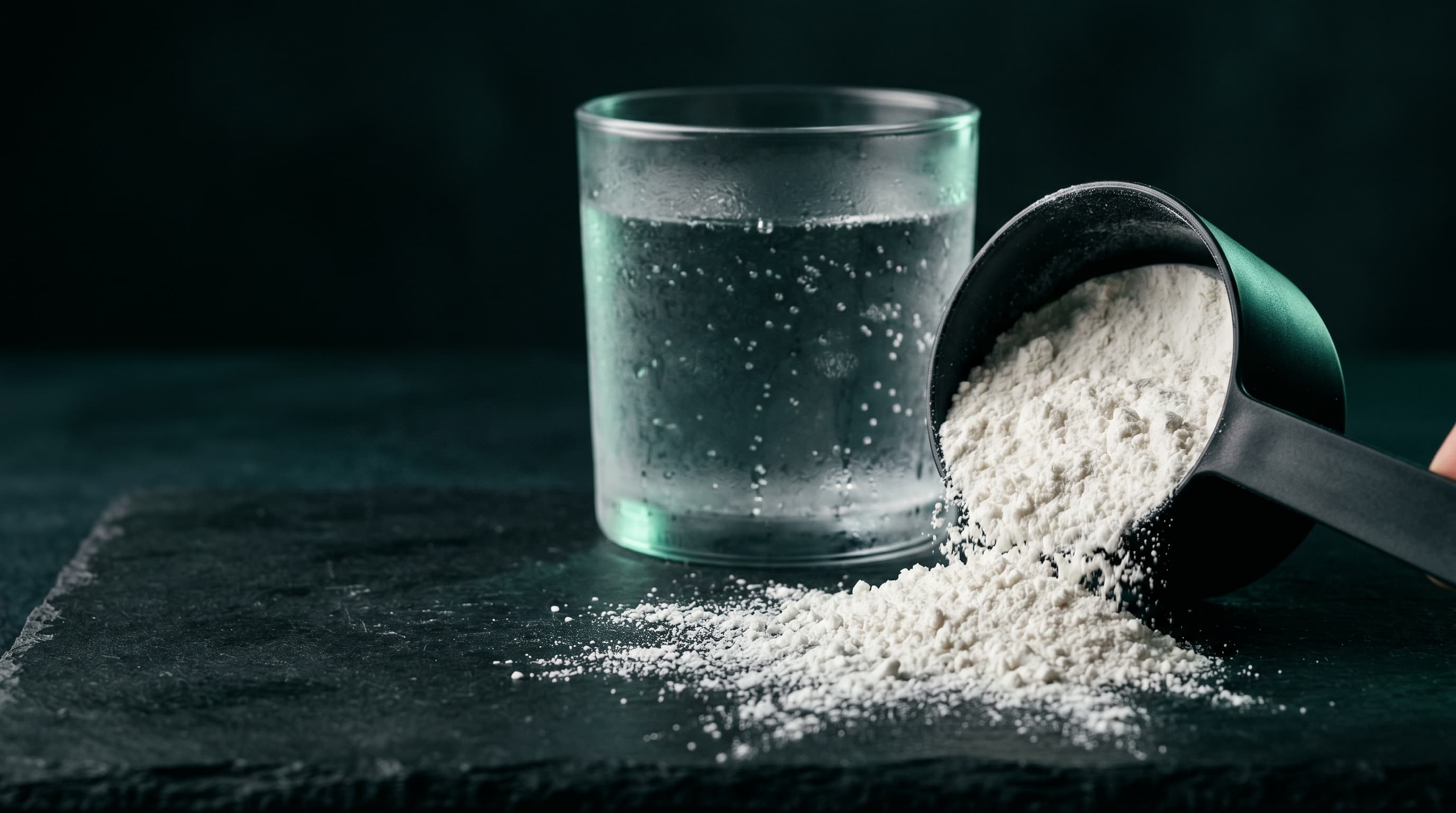
TL;DR: Creatine monohydrate is the single most evidence-backed supplement for body recomposition. Take 3-5g per day, every day, at any time. Daily consistency beats timing, and the loading phase is optional. It works by letting you do more hard reps, which builds more muscle; meta-analyses also show a small drop in body fat percentage at maintenance doses. The 1-2kg you gain in the first weeks is intracellular water, not fat. It is not a steroid, it does not damage your kidneys, and it will not make your hair fall out.
Creatine has more than 500 peer-reviewed studies behind it, and it is still the supplement people get most wrong. They skip it because they're afraid of "water weight." They over-complicate it with loading protocols and exact timing windows. Or they expect it to melt fat on its own. None of that matches the evidence. If you are trying to build muscle while losing fat (the goal of body recomposition) creatine is the cheapest, safest lever you have. Here is how to actually use it.
What Creatine Does. And Why It Helps Recomp
Creatine is a molecule your body already makes and stores mostly in skeletal muscle, where it's converted to phosphocreatine. Phosphocreatine regenerates ATP, the immediate fuel for short, high-effort bursts. More stored creatine means you can grind out an extra rep or two on a hard set before failure.
That mechanism is the whole point. Creatine does not directly burn fat or directly build muscle. It improves the quality of your training, and better training is what drives recomposition. As the International Society of Sports Nutrition put it in its position stand, creatine monohydrate is "the most effective ergogenic nutritional supplement currently available" for increasing high-intensity exercise capacity and lean body mass during training (Kreider et al., 2017).
The downstream effects on body composition are well documented:
- More lean mass. Across training studies, creatine plus resistance training produces greater gains in lean body mass than training alone, an effect first quantified in Branch's (2003) meta-analysis and confirmed repeatedly since.
- A small drop in body fat percentage. A 2024 GRADE-assessed dose-response meta-analysis in the Journal of the International Society of Sports Nutrition found that maintenance-dose protocols (and doses above 5g/day) were associated with a significant reduction in body fat percentage. The effect is modest, and it's largely because you're adding muscle and training harder, not because creatine is a fat burner.
Net result during a recomp: more muscle, slightly less fat, better lifts. Exactly the direction you want.
The Dose: 3-5 Grams a Day, Forever
This is the part people overthink. The effective maintenance dose is 3-5 grams of creatine monohydrate per day, taken every single day, including rest days. That's it.
You'll often see a "loading phase" recommended: ~20g/day split into four doses for 5-7 days, then drop to 3-5g. Loading isn't wrong. It saturates your muscles in about a week instead of three to four. But it's optional. If you just take 5g daily and skip loading, your muscle creatine stores reach the same saturation point; it simply takes a few weeks longer to get there (Kreider et al., 2017). Loading also tends to front-load the temporary water-weight gain and, for some people, mild GI discomfort. Unless you have a competition or photoshoot in two weeks, skip it.
| Protocol | How | Time to saturation | Worth it? | |---|---|---|---| | Loading | ~20g/day for 5-7 days, then 3-5g/day | ~1 week | Only if you need fast results | | No loading | 3-5g/day from day one | ~3-4 weeks | Default for most people |
Buy plain creatine monohydrate, ideally a product carrying a third-party seal like Creapure or NSF Certified for Sport. The fancier forms (HCl, buffered, "micronized plus") cost more and have no proven advantage over monohydrate.
Timing: It Barely Matters
The supplement industry sells "anabolic windows." Creatine doesn't have one in any meaningful sense. Because the benefit comes from keeping your muscles saturated over weeks, the daily total is what counts, not the clock.
The one nuance: a small study by Antonio & Ciccone (2013) found a slight edge for taking creatine after training versus before. The difference was minor and hasn't been robustly replicated, so don't lose sleep over it. Practical rule: take your 5g whenever you'll actually remember it every day: with a meal, in your post-workout shake, or with your morning coffee. Consistency is the only timing variable that matters.
The Myths, Settled
A 2021 review explicitly built to address creatine misconceptions (Antonio et al., 2021) is the cleanest source here. The short version:
- "It's just water weight / it makes you fat." Creatine pulls water into muscle cells (intracellular), which is why you might see +1-2kg on the scale in the first couple of weeks. That is not fat, and it is not the bloated, under-the-skin look people fear. It's a sign the supplement is working. This is also why you should track recomposition with photos and measurements, not just the scale.
- "It's a steroid." It isn't. Creatine is an amino-acid-derived compound found in red meat and fish. It has no structural or functional relationship to anabolic steroids.
- "It wrecks your kidneys." In healthy individuals, long-term supplementation (up to 30g/day for five years in some studies) has shown no adverse effect on kidney function (Kreider et al., 2017). If you have pre-existing kidney disease, check with your doctor. Otherwise this concern is unfounded.
- "It causes hair loss / cramps / dehydration." The 2021 review found no good evidence for any of these.
Creatine Won't Save a Bad Program
Here's the honest part. Creatine amplifies a good training and nutrition setup; it cannot replace one. The lean-mass benefit only shows up alongside resistance training, because the mechanism is "do more hard work in the gym." If you're not applying progressive overload, there's no extra work for creatine to fuel.
The same goes for nutrition. Muscle is built from protein and a sufficient training stimulus; creatine is a multiplier, not the input. Get your protein intake to roughly 1g per pound of goal bodyweight and your calories dialed in for your goal first, whether that's a slight surplus, maintenance, or a structured deficit like a mini cut. Then add creatine. In that order, it's one of the few supplements that reliably earns its place in the cabinet.
Bottom Line
If you lift and you're chasing recomposition, creatine monohydrate is close to a no-brainer: 3-5g a day, every day, no loading required, timing irrelevant. Expect a quick scale bump from muscle water, better performance on hard sets within a few weeks, and, over months, more lean mass and a slightly leaner look. It's effective, dirt cheap, and among the safest supplements ever studied.
Just remember it's the amplifier, not the engine. Get your protein and calories right with our Macro Calculator, train with real progressive overload, and track body composition over time. That's where the recomposition actually happens. Protokl ties the whole loop together: AI photo-based meal logging, workout tracking, and body-composition forecasting in one app, so you can see whether the muscle is actually going on and the fat coming off.
Post to Instagram / TikTok
Tap Share, choose Instagram or TikTok, and this 1080×1080 card loads straight into the post composer — ready to publish. Add your caption and point your bio link back here, since links aren’t tappable inside IG/TikTok posts.
Related reading
- How to Lose Visceral Fat (And How to Know If You Even Have It)Visceral fat is the fat you cannot pinch, and it responds differently to training than the fat you can. Here is how to estimate yours without a scan, and what the trials say actually shifts it.
- GZCLP Review: The Best Beginner Program Nobody RecommendsGZCLP fixes the two things that break StrongLifts 5x5: not enough volume and no way to fail gracefully. Here's how the three-tier structure works, where it still falls short, and who should run it.
- How to Take Progress Photos That Actually Show ChangeMost progress photos are useless because the lighting, pose, and time of day change more than the body does. Here is the protocol that makes the comparison honest.
Want this as a daily protocol?
Protokl builds personalized workout and nutrition plans around your body composition, goals, and experience level. Science-backed. AI-powered. Syncs with Apple Health.
Get Protokl →