Calorie Banking for Weekend Drinking: Does Skipping Lunch Actually Work?
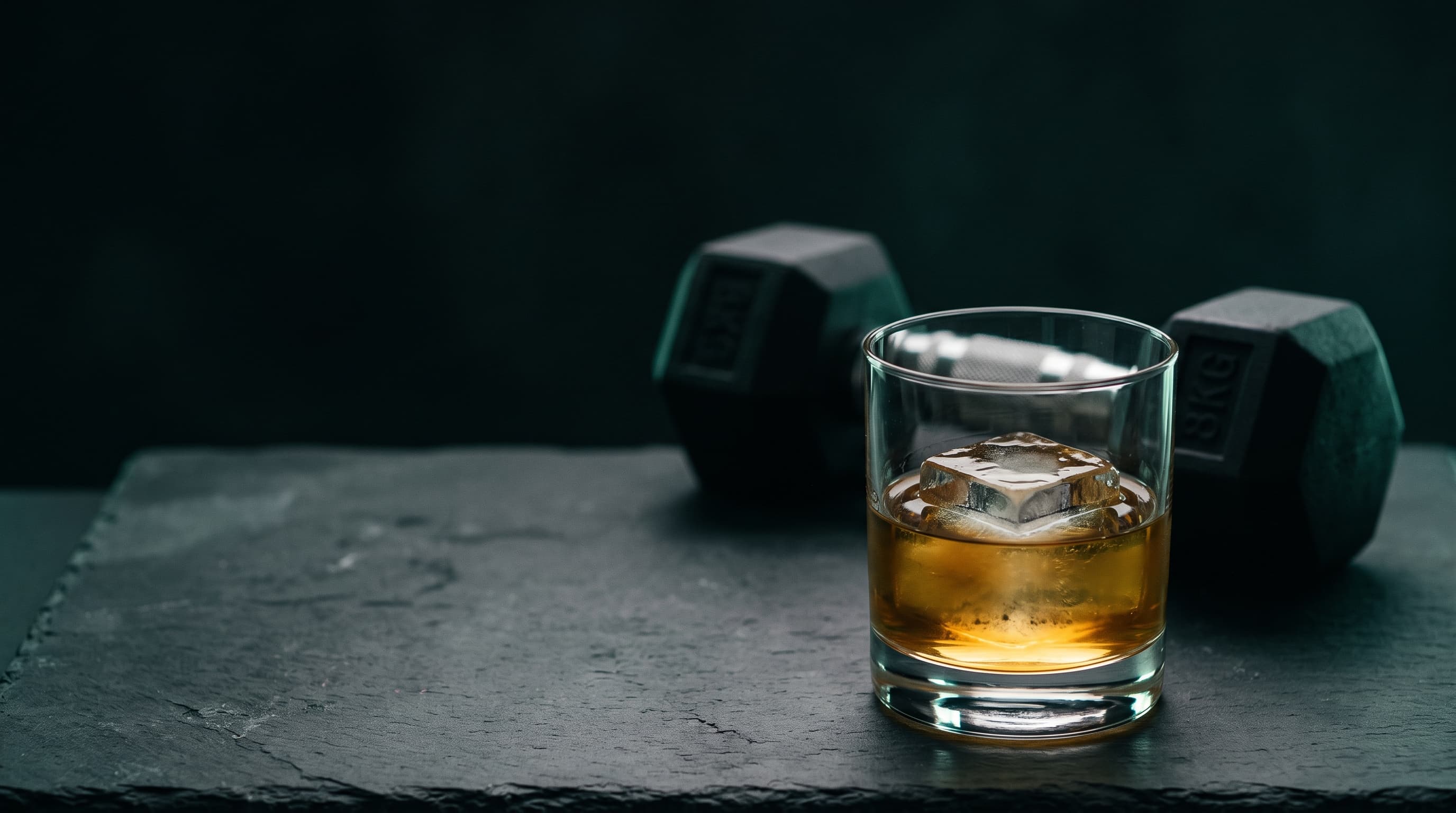
TL;DR: Banking calories by eating less Monday through Friday so you can drink Friday and Saturday will keep the scale flat, because bodyweight follows your weekly energy balance, not your daily one. What it does not do is protect muscle. Skipping lunch usually means skipping protein, and alcohol blunts muscle protein synthesis for hours after you lift. Bank carbs and fat, not protein. Drink on training days. And model the tradeoff before you commit, because the muscle tax is real even when the scale says you are fine.
Here is the honest answer to the question most weekend drinkers are quietly asking: yes, skipping lunch during the week to "save room" for drinks will keep you from gaining fat. Bodyweight tracks your average energy balance over a week or more, so a Tuesday deficit genuinely offsets a Saturday surplus. The scale is not fooled, and neither is your fat cell.
But the scale is not the whole story, and if you lift, calorie banking done the obvious way (skip lunch, drink at night) is one of the most efficient ways to stall your recomposition while feeling like you did everything right.
I built a physique forecasting tool partly because this is exactly how I eat during a busy week. Let me walk through what the model, and the research, actually show.
Why banking works on the scale
The logic is sound. Alcohol carries 7 calories per gram, second only to fat, and a standard drink in the US contains about 14 grams of pure alcohol, which is roughly 98 calories before you add anything (NIAAA, 2023). Once you factor in mixers, beer volume, or wine, real-world drinks land closer to 150 to 300 calories each. A four-drink Saturday can easily run 800 calories on top of a normal day of eating.
Spread that 800-calorie surplus across a week where you cut 200 calories a day Monday through Friday, and the ledger balances. Weekly intake is unchanged, weekly energy balance is unchanged, and your weight holds. This is the same principle behind diet breaks and refeeds: the body integrates energy over time, so where you place the calories matters far less for fat mass than the weekly total does. If you want the underlying math, our guide on how to calculate your TDEE explains how to find the maintenance number you are banking against.
So for pure weight maintenance or slow fat loss, the strategy holds. If your only goal is to not get fat while you enjoy your weekends, banking works.
The muscle tax nobody budgets for
The problem is that muscle does not follow the same weekly-average logic that fat does. Muscle is built and defended day to day, meal to meal, through muscle protein synthesis, and alcohol interferes with that process directly.
In the cleanest study we have, Parr et al. (2014, PLoS ONE) had trained men do a hard workout, then gave them protein with or without alcohol. Alcohol suppressed myofibrillar protein synthesis by roughly 24 percent compared to protein alone, and by 37 percent when paired with carbohydrate instead of protein. Critically, this happened even when the drinkers ate adequate protein. The alcohol did not just crowd out the food. It impaired the machinery.
The mechanism is well described. Steiner and Lang (2015, American Journal of Physiology) showed that alcohol reduces signaling through mTORC1, the pathway that turns a workout and a protein feeding into new muscle. The effect is dose dependent. Controlled work suggests protein synthesis can fall meaningfully within the first hours after drinking and stay depressed for much of the day.
There is a real nuance worth knowing: Duplanty et al. (2017) found the post-exercise signaling impairment showed up in men but not in women, so the muscle tax may be lighter for female lifters. That does not make alcohol free, but it is a genuine sex difference in the data.
None of this means one night out erases a week of training. It does not, and I covered the difference between one night and chronic use in alcohol and fitness. But it means the calories are not the only thing you are banking. You are also banking a blunted anabolic response, and that cost does not show up on the scale.
Where the obvious version goes wrong
The specific way most people bank calories makes the muscle tax worse, not better. Two failure modes do the damage.
You skip the wrong macro. When people cut calories during the week, the easiest meal to drop is lunch, and lunch is usually where a big chunk of daily protein lives. Skip it three or four days a week and you are not just banking calories, you are running a protein deficit on your training days. Combine low protein intake with alcohol's suppression of protein synthesis and you have removed both the raw material and the signal for building muscle at the same time. Muscle needs a daily protein floor of roughly 0.7 to 1 gram per pound of bodyweight, and banking should never dip below it.
Alcohol removes the brakes. The second failure mode is behavioral. Alcohol lowers inhibition around food, which is why the drinks are rarely the whole story. The late-night pizza, the next-morning recovery meal, the "I already blew it" Sunday all ride along with the drinking. A plan that was perfectly balanced on a spreadsheet blows past its weekly target because the surplus you actually consumed was double what you banked for.
This is the trap. The strategy is not wrong in theory. It is fragile in practice, and the fragility costs you muscle first and fat second.
How to bank calories without wrecking recomp
You can drink on weekends and still make progress. You just have to bank intelligently.
- Bank carbs and fat, protect protein. Keep protein steady every day at your floor, even on the days you eat less overall. Pull the banked calories from carbohydrate and dietary fat, not from your protein meals. Skip the afternoon snack and the extra rice, not the chicken.
- Drink on training days. You will eat more food and carbs on days you lift, which makes the food-for-booze swap easier, and a hard session earlier in the day gives your body its anabolic window before the alcohol arrives.
- Eat protein before you go out. A protein-rich meal before drinking blunts the overnight synthesis drop and takes the edge off the disinhibition that leads to unplanned eating.
- Cap the frequency. A heavier night every week or two, planned and accounted for, is very different from a two-day bender every single weekend. The research on chronic exposure is far less forgiving than the research on the occasional night.
- Count what you actually drink. Log the real drink, mixers included, not the optimistic version. This is where most banking plans quietly fail.
Done this way, the strategy stops being "starve during the week, binge on the weekend" and becomes a controlled reallocation of non-protein calories toward the times you value them most. That is a defensible way to enjoy a social life while cutting. Our full cut protocol guide shows how to set the weekly deficit that all of this sits inside.
Model it before you commit
The reason I stopped guessing about this is that the tradeoff is not intuitive. Skipping lunch four days a week feels aggressive, but two drinking nights can erase most of the deficit you thought you earned. The only way to know whether your specific pattern nets out to fat loss, maintenance, or a slow creep is to run the numbers over months, not days.
That is what the physique forecast tool does. Set your training, your calorie and protein targets, then dial in real-life sliders like skipped meals, weekend drinks, and missed protein goals, and watch the projected body-fat and lean-mass curves move. It turns "I think this is fine" into a line you can actually see.
Calorie banking is a legitimate tool. It keeps you lean while you have a life. Just remember that the scale is measuring fat, and muscle is keeping its own set of books. Protect protein, drink on training days, model the tradeoff, and you can have the weekend without paying for it in the mirror.
Track it for real with Protokl: log your drinks alongside your training, hold your protein floor automatically, and let the forecast show you where your weekends are actually taking your physique.
Post to Instagram / TikTok
Tap Share, choose Instagram or TikTok, and this 1080×1080 card loads straight into the post composer — ready to publish. Add your caption and point your bio link back here, since links aren’t tappable inside IG/TikTok posts.
Related reading
- How to Manage Hunger on a Cut Without Eating More CaloriesHunger is the reason most cuts fail, and it's more controllable than people think. Here's what actually moves appetite at a fixed calorie target: protein dose, food volume, processing level, and sleep.
- How to Calculate Your TDEE Accurately (Not Just a Formula)Learn how to calculate your Total Daily Energy Expenditure using the Mifflin-St Jeor equation, why static calculators are often wrong, and how adaptive tracking gives you a more accurate number over time.
- How to Train in a Calorie Deficit (Without Losing What You Built)The program isn't what decides whether you keep muscle on a cut. The size of the deficit is. Here's what the training research actually supports: deficit ceiling, volume floor, protein target, and realistic performance expectations.
Want this as a daily protocol?
Protokl builds personalized workout and nutrition plans around your body composition, goals, and experience level. Science-backed. AI-powered. Syncs with Apple Health.
Get Protokl →