Body Recomposition for Women: What Actually Changes (and What Doesn't)
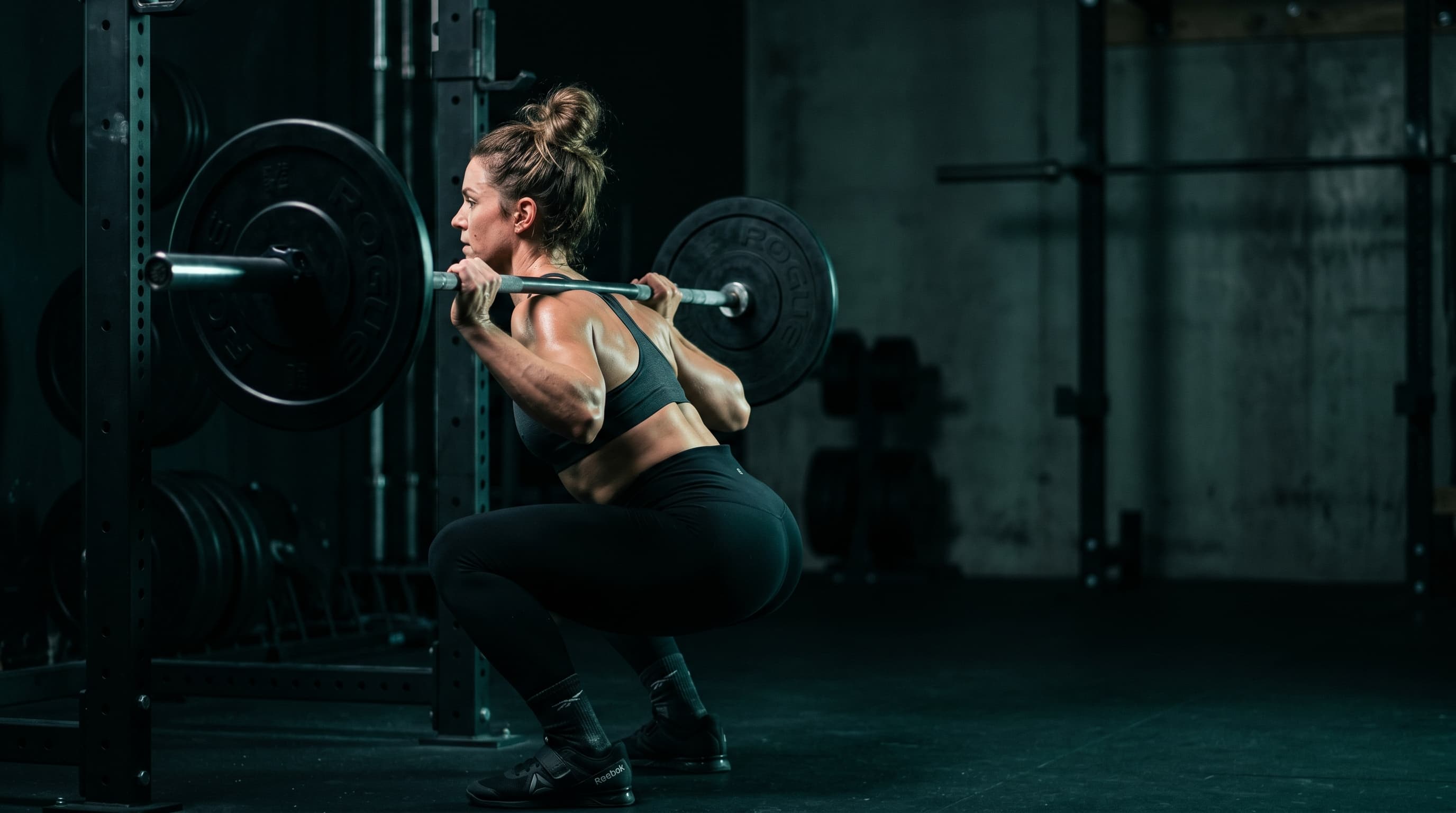
TL;DR: Body recomposition works for women through the exact same physiology as men: enough protein (0.8-1g per pound of bodyweight), progressive overload 3-4x per week, and eating at maintenance or a small deficit. The genuine differences are smaller absolute strength increases, greater fatigue resistance (you can tolerate more volume and shorter rest), and hormonally stubborn lower-body fat. Menstrual-cycle "phase-based" programming is mostly hype, and lifting heavy will not make you bulky.
Search "body recomposition for women" and you get two camps: the one that says women's bodies are so hormonally unique they need a completely separate playbook, and the one that says sex doesn't matter at all. Both are wrong. The fundamentals are identical. A handful of real differences are worth programming around, and almost none of them are the ones the internet obsesses over.
If you want the universal mechanics first, start with our complete guide to body recomposition. This post covers what's actually sex-specific.
What Is Genuinely the Same
Muscle is muscle. The signaling pathway that builds it, mechanical tension driving muscle protein synthesis, does not read your chromosomes. The largest meta-analysis on the question, Roberts et al. (2020) in Journal of Strength and Conditioning Research, pooled studies on untrained men and women and found similar relative gains in strength and muscle size between sexes. Men add more absolute mass because they start with more, but pound-for-pound of starting muscle, women adapt just as well, and often show slightly greater relative upper-body strength gains because they start further from their ceiling.
The implication is freeing: you do not need a "female" program. You need progressive overload, enough protein, and recovery. The principles in building muscle while losing fat apply unchanged.
Difference 1: Protein Scales Down in Grams, Not Per Pound
Protein recommendations are per unit of bodyweight, so a 140 lb woman simply needs fewer total grams than a 190 lb man, not a different ratio. Target 0.8-1g per pound of bodyweight (roughly 1.6-2.2 g/kg), the same evidence-based range used for any lifter in a deficit. A systematic review of pre-menopausal female athletes (Mercer et al., 2020, Nutrients) supports the upper end of that range when training hard and dieting.
The catch women run into isn't the ratio. It's hitting it. At a lower bodyweight your calorie budget is smaller, so protein has to crowd out a larger share of a tighter total. That makes protein prioritization more important, not less. If you've never run the numbers, our protein guide and the macro calculator will get you a target in two minutes.
Difference 2: You Recover Faster Within a Session
This one is real and underused. Women are, on average, more fatigue-resistant than men during resistance exercise. They fatigue less per set and recover faster between sets, largely due to a higher proportion of type I fibers and differences in blood flow and metabolism. Practically, that means you can often train with more total volume, shorter rest periods, and higher reps before failure without the same drop-off.
So if a program written for the general population prescribes 3 minutes of rest and you feel ready at 90 seconds, you probably are. More quality volume is one of the strongest drivers of hypertrophy, and it's an advantage many women leave on the table by copying male rest-period defaults.
Difference 3: Lower-Body Fat Is Hormonally Stubborn
Estrogen preferentially directs fat storage to the hips, thighs, and glutes, and that fat is more resistant to mobilization than abdominal fat. This is why many women lean out visibly in the upper body and waist well before the lower body budges, and why "spot reduction" of the thighs is a losing strategy.
The answer isn't more cardio or a magic exercise. It's patience and adherence: keep the deficit modest, hold protein high, and let total body fat come down over months. Track the trend, not the day-to-day. Because recomp is slow, a structured mini-cut, a short, sharper deficit of a few weeks, is often a more motivating way to make visible progress than grinding a tiny deficit indefinitely.
The Overrated Difference: Menstrual-Cycle "Phase-Based" Training
You'll see programs that tell you to train heavy in the follicular phase and "back off" in the luteal phase. The theory is plausible, estrogen peaks in the follicular phase and may support strength, but the strongest recent data undercuts it. Colenso-Semple et al. (2023), in The Journal of Physiology, measured muscle protein synthesis and breakdown after resistance exercise across cycle phases and found no meaningful difference in the muscle-building response. Reviews of phase-based programming (e.g., Thompson et al., 2021) likewise rate the evidence as low-quality and inconsistent.
The practical takeaway: train consistently, autoregulate by how you feel, and don't deload an entire week of your life on a calendar theory. If you train through some bloating and lower energy in the late-luteal phase, you're not sabotaging anything. Consistency beats periodizing around a hormone curve the muscle doesn't seem to notice.
The Myth That Stops Women Before They Start: "I'll Get Bulky"
You will not. Women produce roughly 10-20x less testosterone than men, which is the single biggest reason men carry more muscle. The lean, athletic look that women associate with "toned" is the result of building muscle and dropping fat, exactly what recomposition does. The "bulky" fear keeps people on 5 lb dumbbells and endless cardio, which is precisely the combination that fails to change body composition. Lift heavy, eat enough protein, and the outcome is shape, not size.
Putting It Together
A woman's recomposition plan, in five lines:
- Calories: maintenance to ~200-300 below TDEE. No crash deficits. They cost you muscle and adherence.
- Protein: 0.8-1g per pound, hit daily, non-negotiable.
- Training: progressive overload 3-4x/week, full body or upper/lower. Use your fatigue resistance: more volume, shorter rest.
- Lower-body fat: expect it last. Judge by photos and tape, not the scale.
- Cycle: train through it. Autoregulate, don't calendar-periodize.
Realistic timelines and how to read murky progress are covered in how long body recomposition takes. The short version is months, not weeks, and the scale is the worst tool for measuring it.
That last point is exactly why we built Protokl. Recomp is the hardest progress to see: your weight barely moves while your body changes underneath it. Protokl forecasts your body composition from your weight, training, and nutrition trend, so the muscle you're adding and the fat you're losing show up as a line you can actually read, instead of a flat scale that makes you quit a plan that's working. If you're recomping and tired of guessing, that's the tool built for it.
The science of body composition is sex-inclusive but individual. Use these principles as a starting framework, and adjust based on your own data and how you recover.
Post to Instagram / TikTok
Tap Share, choose Instagram or TikTok, and this 1080×1080 card loads straight into the post composer — ready to publish. Add your caption and point your bio link back here, since links aren’t tappable inside IG/TikTok posts.
Related reading
- How to Take Progress Photos That Actually Show ChangeMost progress photos are useless because the lighting, pose, and time of day change more than the body does. Here is the protocol that makes the comparison honest.
- How to Break a Weight Loss PlateauStuck at the same weight for weeks? Most plateaus aren't metabolic. Here's how to diagnose the real cause in order, and what to do when adaptation is genuine.
- GZCLP Review: The Best Beginner Program Nobody RecommendsGZCLP fixes the two things that break StrongLifts 5x5: not enough volume and no way to fail gracefully. Here's how the three-tier structure works, where it still falls short, and who should run it.
Want this as a daily protocol?
Protokl builds personalized workout and nutrition plans around your body composition, goals, and experience level. Science-backed. AI-powered. Syncs with Apple Health.
Get Protokl →